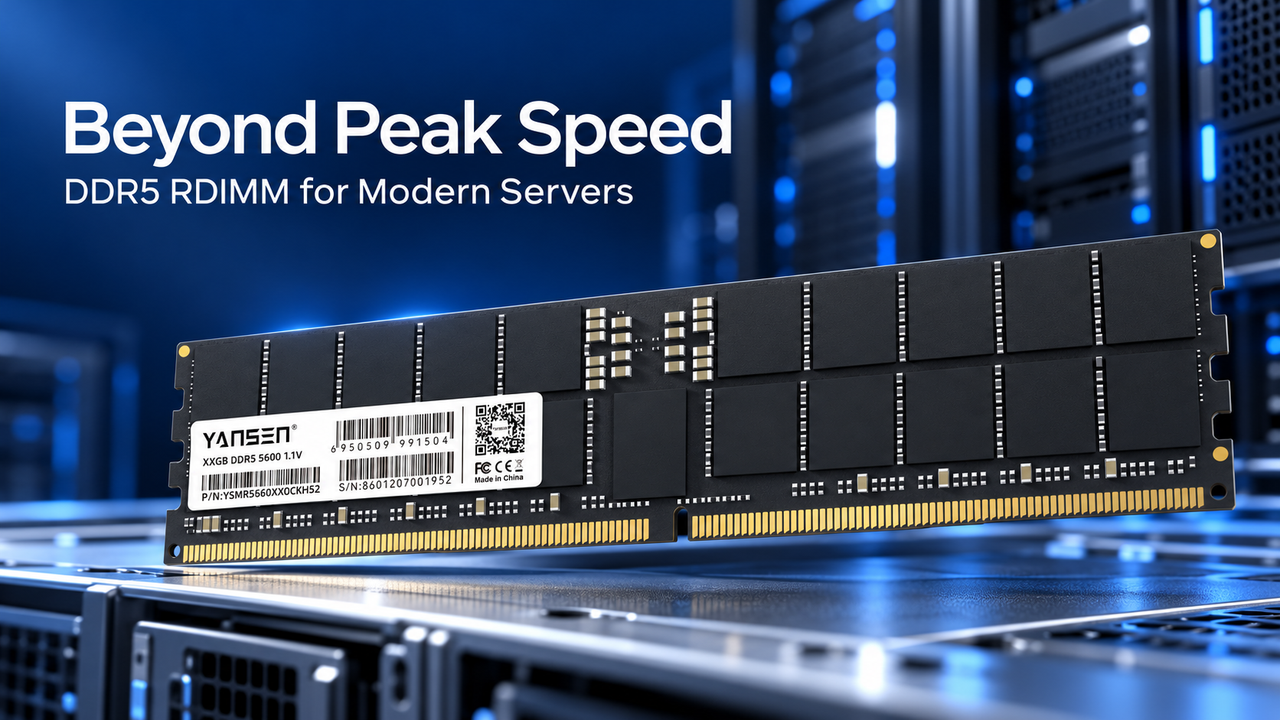
Server memory is becoming a more important part of overall system performance as modern computing platforms continue to evolve. CPUs are adding more cores, AI workloads are becoming more data-intensive, and applications such as high-performance computing, analytics, and large-scale databases increasingly depend on fast access to large amounts of data.
Recent announcements of faster DDR5 RDIMM and MRDIMM interface chipsets show how the industry is responding to rising bandwidth requirements. These developments point to future platform capabilities, but a chipset announcement alone does not establish the availability of qualified memory modules or supported production servers.
However, higher memory speed does not automatically mean a better server. For IT managers, system architects, and procurement teams, the more important question is why memory bandwidth is increasing so rapidly and when a higher-speed memory architecture actually makes sense.
The answer depends on the relationship between processor performance, memory capacity, workload characteristics, platform compatibility, reliability, and total cost. Understanding this relationship is becoming essential when planning the next generation of server infrastructure.
-
What Next Generation Memory Trends Mean for RDIMM Buyers
Server memory development is increasingly focused on sustaining bandwidth per processor core as CPU core counts and data-intensive workloads grow. Faster interfaces are one part of that effort; capacity, channel utilization and platform qualification remain equally important for deployment.
Faster DDR5 RDIMM Interfaces Indicate the Direction of Development
Rambus announced its DDR5 9600 Server RDIMM chipset in July 2026, built around its sixth-generation registering clock driver, RCD06. The chipset enables RDIMM designs targeting up to 9,600 MT/s. The announcement concerns module interface components for next-generation platforms; it does not mean that every DDR5 server can operate at that data rate.
For buyers, the useful lesson is that the conventional RDIMM architecture continues to evolve. A purchasing decision should still begin with the data rates and module configurations supported by the intended processor and server, followed by workload testing.
MRDIMM-16000 Targets the Next Bandwidth Level
MRDIMM takes a different approach to increasing effective memory bandwidth. By using multiplexing techniques across memory ranks, MRDIMM is designed to deliver significantly higher bandwidth than conventional memory configurations.
Solutions reaching up to 16,000 MT/s are particularly relevant to AI infrastructure, HPC, and other accelerated computing platforms where memory bandwidth can become a limiting factor.
These technologies should not be interpreted as meaning every server will immediately require 16,000 MT/s memory. Instead, they indicate that memory architecture is evolving alongside the growing performance of modern processors.
These industry developments provide context for future bandwidth needs. They are not specifications for the upcoming YANSEN RDIMM products discussed later in this article.
-
Why Memory Bandwidth Matters for Modern Servers
One of the biggest changes in modern server architecture is the growing gap between computing capability and data delivery.
A faster CPU can execute more operations, but every operation still depends on data being available. If memory cannot supply that data quickly enough, part of the processor’s computing capacity may remain underutilized.
This imbalance is part of the memory-wall problem, which involves both memory latency and bandwidth. Increasing the data transfer rate can improve bandwidth, but it does not automatically reduce every form of memory access latency or eliminate application stalls.
AI makes these distinctions especially important. CPU-based inference, data preprocessing, retrieval services and memory-offload pipelines can place substantial demands on host memory. In GPU-accelerated systems, CPU host memory and GPU-local memory, such as HBM, serve different roles and have different bandwidth limits.
DDR5 RDIMMs improve the host-memory subsystem. They do not directly increase GPU-local memory bandwidth. Their impact on an AI workload depends on where its working data resides and whether host-memory access, computation, storage, networking or CPU–GPU transfers are the limiting factor.
As a result, simply adding more compute resources does not always produce proportional performance gains. The memory subsystem must be capable of feeding those resources efficiently.
-
Why DDR5 RDIMMs Remain Relevant
Registered Signaling for Supported Server Platforms
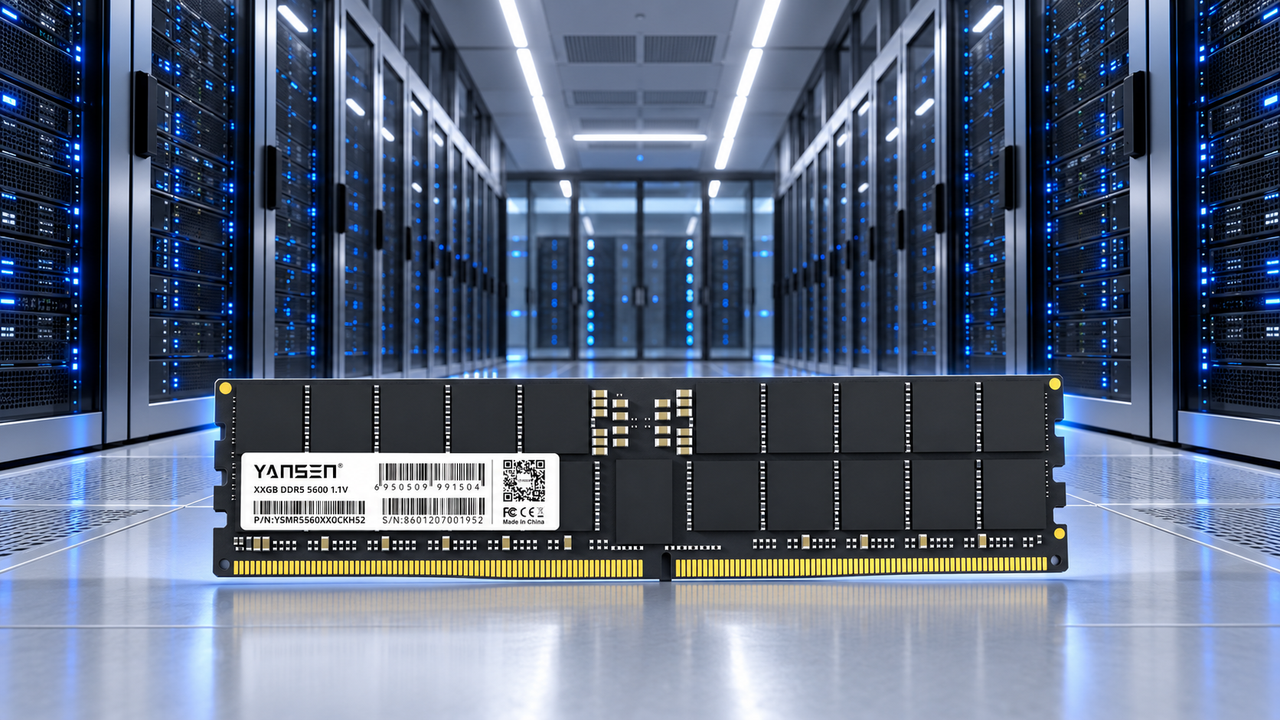
A registered DIMM uses a registering clock driver to buffer clock and command/address signals, reducing the electrical load presented to the processor memory controller. Conventional RDIMMs do not buffer the data path in the same way as MRDIMMs. The registered architecture supports server memory configurations when used within the processor and platform population rules.
RDIMM compatibility is specific to the platform. A matching DDR generation or physical connector does not establish compatibility with an unbuffered DIMM system. Buyers must verify the supported module type, capacity, rank organization and operating data rate.
Capacity and Channel Balance for Real Workloads
Registered DIMMs remain a mainstream choice for enterprise servers because they provide a strong balance of memory capacity, stability, performance, and platform compatibility.
They are well suited to many databases, virtualization platforms, enterprise applications, storage servers, and general-purpose data center systems. For these workloads, the additional bandwidth offered by an extreme memory architecture may not justify the added platform requirements or cost.
Capacity determines how much of the working set can stay in RAM. Channel population determines how much of the platform’s aggregate memory bandwidth can be used. More DIMMs per channel or different module organizations can change the supported operating rate, so an expansion plan should follow the server vendor’s guidance.
Reliability Requires More Than a Module Label
Server memory selection should include module-level ECC support, platform error reporting and qualification. DDR5 on-die ECC operates inside individual DRAM devices and is distinct from system-level ECC protection across the memory interface. Buyers should confirm the actual module organization and the processor’s supported error-management features.
RDIMM is a module architecture, not a guarantee of universal compatibility, industrial temperature capability or uninterrupted operation. Claims about validation, environmental limits and service support should be tied to the specific product and platform.
Matching RDIMM Configuration to the Deployment
| Deployment priority | RDIMM selection focus | What to verify |
| More virtual machines | Capacity and balanced channels | Supported capacity, DIMMs per channel and population order |
| Database or analytics growth | Working-set capacity and measured bandwidth | Application profiling, channel use and platform support |
| CPU inference or preprocessing | Capacity, throughput and access patterns | Model footprint, concurrency and host-memory bottlenecks |
| Long-term project expansion | Qualified configurations and service planning | Module organization, validation, availability and warranty terms |
-
The Fastest Memory Is Not Always the Right Memory
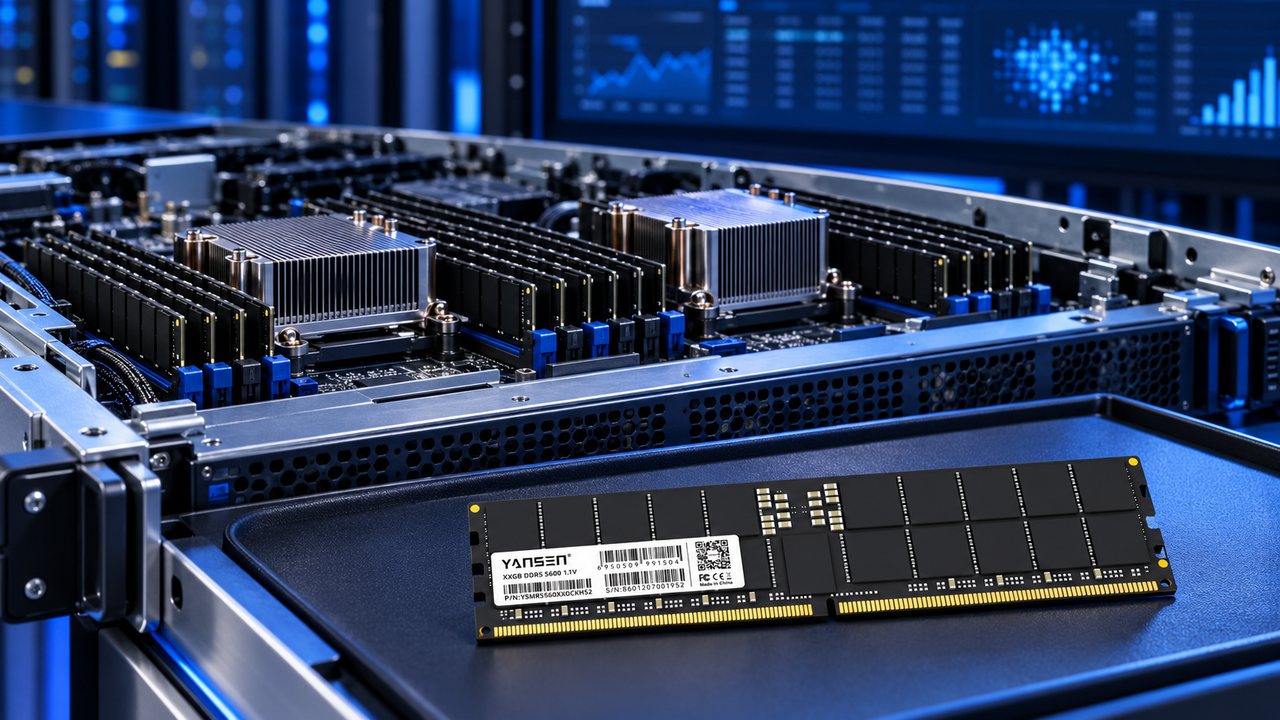
A high MT/s rating looks attractive on a specification sheet, but server performance cannot be evaluated from memory speed alone.
The first consideration is platform compatibility. The CPU memory controller, motherboard, BIOS, memory channels, and DIMM population all influence the actual operating configuration. A module rated for a particular speed does not guarantee that every server will operate at that speed.
Memory capacity is equally important. If a server does not have enough RAM for its workload, the resulting reliance on slower storage can create a much larger performance penalty than the difference between two memory-speed levels.
Channel configuration also matters. Properly balanced memory population helps the processor make effective use of available bandwidth. Simply installing the fastest modules without considering the platform architecture can lead to disappointing real-world results.
Finally, the workload itself determines whether additional bandwidth is valuable. A highly memory-bandwidth-bound AI or HPC workload may benefit significantly, while a conventional business application may see little improvement.
For this reason, the best memory is not necessarily the one with the highest MT/s rating. It is the one that allows the complete server platform to deliver the required performance reliably and economically.
-
Different Workloads Need Different RDIMM Strategies
GPU Accelerated AI Servers
In servers with discrete GPUs, RDIMMs provide CPU host memory. They can support input pipelines, CPU-side services and memory-offload tasks. Faster host memory may improve throughput when those functions are limiting performance, but it cannot by itself resolve insufficient GPU-local memory capacity or bandwidth.
AI Inference
For CPU-based inference, model weights, runtime buffers, context length and concurrent requests all influence memory requirements. Some workloads are sensitive to bandwidth, while others depend more strongly on capacity or compute performance.
Data decoding, transformation and preprocessing can also make substantial use of host memory. Higher-bandwidth RDIMM configurations can help when profiling identifies host-memory throughput as a bottleneck, provided the processor and platform support the selected configuration.
HPC
Scientific computing and HPC applications often perform intensive calculations on large datasets. Many of these workloads are sensitive to memory bandwidth because processors can process data faster than conventional memory systems can supply it.
For bandwidth-bound HPC applications, higher-speed memory can therefore have a direct impact on application throughput.
Conventional DDR5 RDIMMs can serve supported HPC platforms, while other architectures may be appropriate when measured bandwidth needs exceed their capabilities. The choice should follow application benchmarks and platform support, rather than the workload category alone.
Databases and Analytics
Large databases often benefit from sufficient memory capacity because frequently accessed data can remain in RAM. Analytics workloads can also involve substantial data movement.
Database performance also depends on CPU performance, storage latency, I/O bandwidth, caching and software architecture. Increasing the memory data rate should therefore be considered as part of a broader system optimization strategy, rather than as a guaranteed database acceleration measure.
Virtualization and Enterprise Servers
Virtualization hosts often prioritize memory capacity because many virtual machines share the same physical server.
For these environments, adding sufficient RAM and maintaining a balanced memory-channel configuration may provide more practical value than choosing the highest available memory speed.
Expansion planning should account for the number of available channels and slots, the validated module capacities and any data-rate changes associated with the target population. A larger memory footprint is useful only when the configuration remains supported and matches the workload.
-
What Buyers Should Verify Before Selecting DDR5 RDIMMs
For B2B procurement, server memory should be evaluated using a complete system perspective rather than a single specification.
-
Platform compatibility: Verify CPU, motherboard, BIOS, DIMM type, supported data rates, and recommended population rules.
-
Capacity: Determine current requirements and leave sufficient headroom for application growth and future expansion.
-
Bandwidth: Identify whether the workload is genuinely memory-bandwidth bound before paying for higher-speed technology.
-
Reliability: Consider error-management capabilities, module quality, validation, operating stability, and long-term supply consistency.
-
Power and thermal behavior: Higher-performance memory can influence system power consumption and thermal requirements, especially in high-density deployments.
A practical procurement framework is therefore:
Performance × Capacity × Compatibility × Reliability × Total Cost of Ownership
The objective is not to maximize one variable. It is to achieve the best overall configuration for the intended server platform and workload.
-
YANSEN DDR5 RDIMMs for Upcoming Server Projects
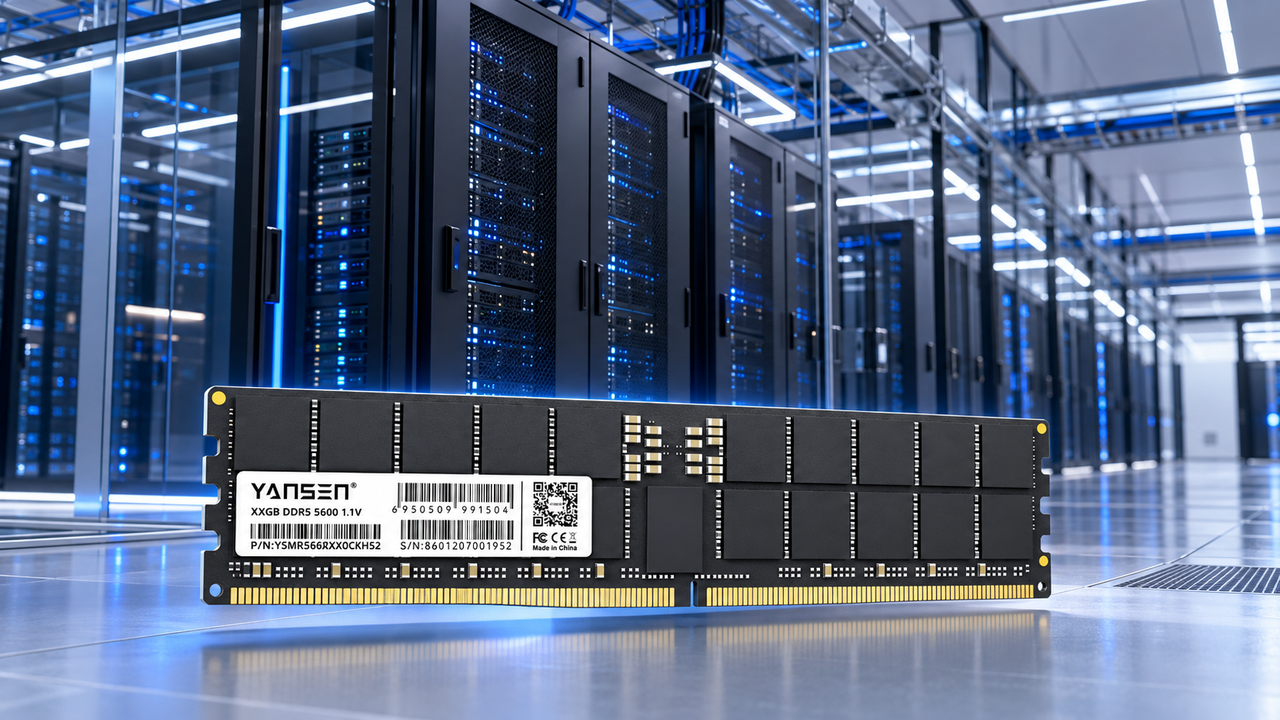
YANSEN is preparing to introduce DDR5 RDIMM products for compatible server platforms. For prospective deployments, selection should begin with the processor and motherboard requirements, followed by capacity planning, supported data rates and DIMM population rules.
Project teams can prepare for evaluation by identifying the server model, processor, BIOS version, existing memory configuration, target capacity and primary workload. These details help define the specifications and qualification checks needed for a suitable RDIMM configuration.
Product-specific capacities, data rates, module organization, operating limits and service terms should be confirmed against the released YANSEN datasheet and applicable qualification information. The industry roadmap figures discussed earlier do not describe the upcoming YANSEN product specifications.
Contact YANSEN to discuss the upcoming DDR5 RDIMM specifications and your server memory requirements.
Conclusion: Matching RDIMM Configuration to System Requirements
Advances in memory interfaces show that bandwidth remains a critical part of server development. For enterprise buyers, the practical task is to select a supported configuration that balances capacity, bandwidth, reliability features, power and cost.
DDR5 RDIMMs remain relevant across virtualization, databases, CPU-based inference, preprocessing and other server workloads. Their value depends on how effectively the selected modules work with the processor, memory channels and application requirements.
A suitable RDIMM configuration starts with platform qualification and workload needs. Peak MT/s is one input to that decision, rather than a substitute for it.
Contact YANSEN to discuss memory and storage solutions for your next server or industrial computing platform.
-
Frequently Asked Questions About DDR5-9600 and MRDIMM-16000
What is a DDR5 RDIMM?
A DDR5 RDIMM is a registered DDR5 memory module that uses a registering clock driver to buffer clock and command/address signals. It is intended for platforms that explicitly support registered memory and is commonly used in servers.
Which server platforms support DDR5 RDIMMs?
Support depends on the processor memory controller and server design. Check the server specifications, supported module list and memory population guide. DDR5 support alone does not establish RDIMM compatibility.
Can RDIMMs and UDIMMs be mixed?
RDIMMs and UDIMMs should not be mixed in the same memory configuration. They use different signaling architectures, and the platform must explicitly support the installed module type. Physical fit does not establish compatibility.
Will a higher rated RDIMM always run at its advertised data rate?
No. The operating rate depends on the processor, server firmware, module organization and population rules. More DIMMs per channel or a different rank configuration may reduce the supported rate.
How should enterprises balance memory capacity and bandwidth?
First provide enough capacity for the working set and expected growth. Then evaluate channel population and data rate against measured workload needs. Insufficient capacity and insufficient bandwidth create different bottlenecks, so both should be assessed.
Do AI servers need MRDIMMs instead of RDIMMs?
No universal rule applies. Conventional DDR5 RDIMMs can support AI-related workloads on compatible platforms. MRDIMMs require specific platform support and are an option for additional host-memory bandwidth. GPU-local memory and interconnect bottlenecks must be assessed separately.
Is DDR5 on die ECC the same as server ECC?
No. On-die ECC corrects certain errors within an individual DRAM device. Module-level ECC works with the memory controller to provide protection across the memory interface. Confirm the actual module and platform capabilities.
What information is needed to select a YANSEN DDR5 RDIMM?
Prepare the server and CPU models, BIOS version, current memory configuration, target capacity and workload requirements. Confirm the available product specifications, platform validation and service terms with YANSEN before selection.