1. Introduction
In less than a decade, drones have evolved from simple “aerial toys” for hobbyists into intelligent airborne terminals that power industries ranging from agriculture to defense. Whether mapping vast farmlands, inspecting power lines, delivering medical supplies, or conducting surveillance, drones today rely heavily on one invisible yet critical component: data storage.
Among the available options, industrial-grade Solid State Drives (SSDs) and industrial SD cards are the two dominant storage solutions in the drone ecosystem. While both have unique strengths, industrial SSDs are becoming the backbone of high-performance drone operations, where large-capacity, high-speed, and extreme-environment reliability are non-negotiable.
This article explores why drones need specialized storage, how industrial SSDs power modern UAV applications, and what businesses should consider when choosing between SSDs and SD cards.
2. Why Do Drones Need Specialized Storage?
Unlike smartphones or consumer cameras that operate in controlled environments, drones are exposed to extreme and unpredictable conditions. Their storage devices must therefore withstand challenges far beyond those of consumer-grade electronics.
2.1 Extreme Environmental Conditions
- Low Temperatures at High Altitudes:
At 3,000+ meters or in polar missions, ambient temperatures can drop below -20°C, sometimes reaching -40°C. Consumer-grade flash storage often fails to initialize at such temperatures.
- High Temperatures in Desert or Tropical Climates:
Drone bodies exposed to direct sunlight can heat up to 70–85°C, accelerating NAND wear and risking data corruption.
- Humidity & Electromagnetic Interference:
Drones operating in coastal areas, jungles, or near high-voltage lines face moisture ingress and EM noise, which can cause signal errors.
2.2 Mechanical Stress: Shocks & Vibration
Takeoff and landing generate intense mechanical shocks. During flight, especially under heavy wind or turbulence, high-frequency vibrations stress every onboard component. Consumer SD cards with fragile connectors may loosen, while HDDs are unusable due to moving parts. Industrial SSDs, with no mechanical components, excel in such scenarios.
2.3 High Data Throughput Needs
Aerial Photography Drones: 4K/8K video streams can generate hundreds of MB per second.
Survey & Mapping Drones: Lidar point clouds and high-resolution multispectral images can reach tens of gigabytes per mission.
Security & Defense Drones: Real-time infrared or high-definition video must be stored continuously for analysis.
2.4 Long-Term Reliability
Industrial drones often operate 24/7 for months in applications like power line inspection or environmental monitoring. Storage must withstand hundreds of terabytes of write cycles without performance degradation.
Conclusion: Standard consumer storage is not designed for such demanding conditions. Industrial-grade SSDs and SD cards, built with reinforced NAND, error correction, and wide-temperature designs, are the only viable options.
3. Industrial SSDs: The High-Speed “Data Warehouse” of Drones
3.1 What Are Industrial-Grade SSDs?
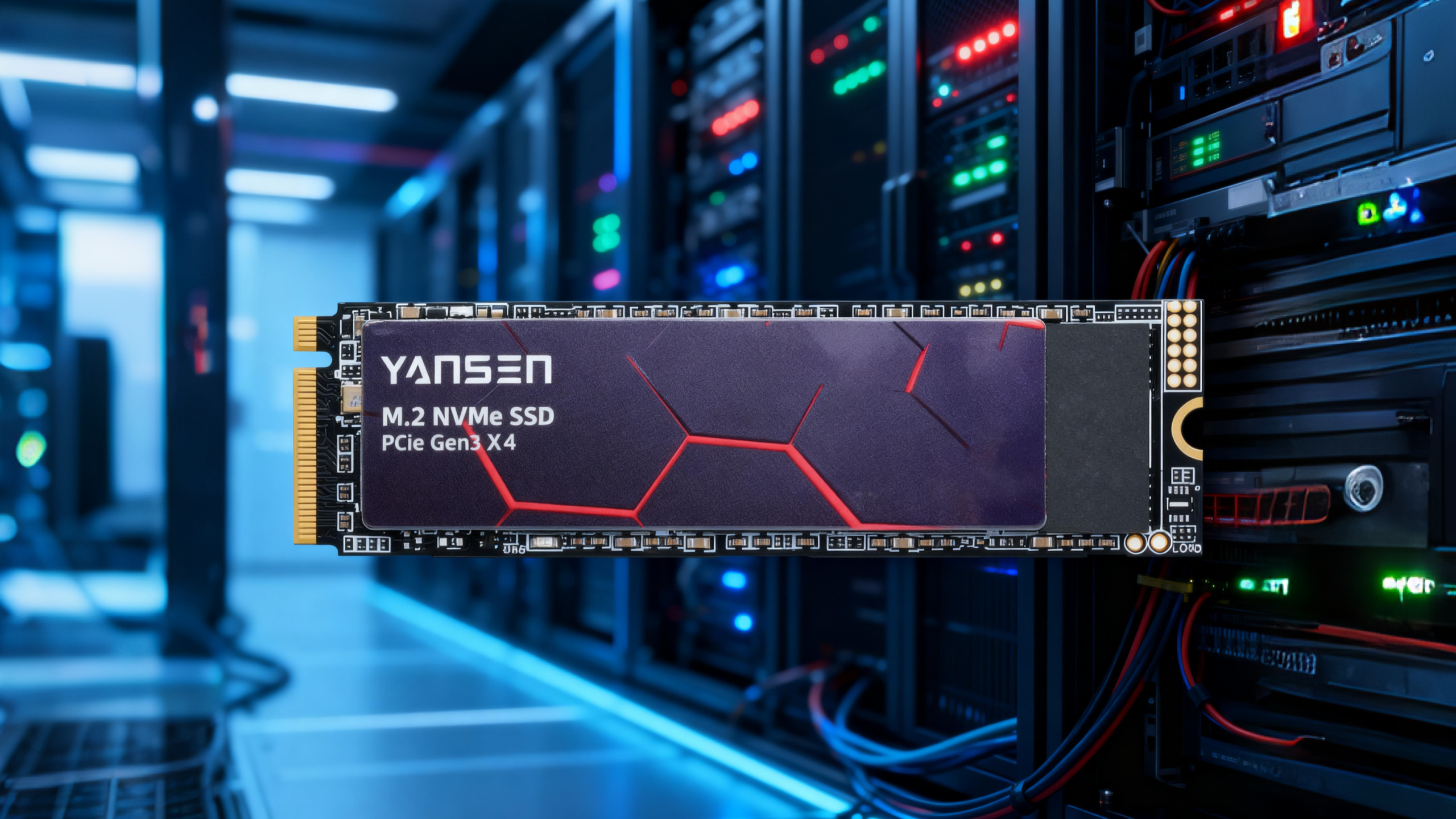
A Solid State Drive (SSD) is built from NAND flash memory chips and a controller, connected via SATA or PCIe interfaces. Unlike spinning hard drives, SSDs have no moving parts, giving them exceptional durability and speed.
Industrial SSDs go a step further by:
- Using higher-endurance NAND(MLC, TLC, or pseudo-SLC modes)
- Supporting wide operating temperatures(-40°C to +85°C)
- Featuring advanced error correction codes (ECC)and wear-leveling algorithms
- Passing rigorous vibration and shock resistance testing
This makes them the ideal storage backbone for professional drones in fields like mapping, logistics, security, and defense.
3.2 Key Drone Applications of Industrial SSDs
3.2.1 Surveying & Inspection Drones
Data Characteristics: 3D lidar point clouds, high-resolution aerial imagery, multispectral scans, infrared thermography.
Challenges: Files are massive (10–50 GB per mission), require sequential high-speed writes to avoid frame loss.
SSD Advantages:
- Sequential write speedsof 500 MB/s to 3 GB/s prevent dropped frames.
- Capacities of 512 GB to 4 TBensure extended mission autonomy.
- Low latencyensures data is immediately available for onboard AI pre-analysis.
Example: In power grid inspection, drones must detect hairline cracks in insulators. Missing a single frame could mean overlooking a fault—SSD speed ensures every pixel is captured.
3.2.2 Logistics & Cargo Drones
Data Characteristics: Route maps, cargo telemetry (e.g., temperature, humidity), communication logs.
Challenges: Data must be accessed instantly by the flight controller for adaptive path planning.
SSD Advantages:
- <100 microsecond random read latency, enabling near-instant response.
- Reliable storage of flight logs and delivery verification data.
3.2.3 Military & Security Drones
Data Characteristics: Encrypted video feeds, reconnaissance imagery, sensor logs.
Challenges: Harsh climates, electromagnetic warfare environments, mission-critical reliability.
SSD Advantages:
- Wide temperature toleranceensures cold starts at -40°C.
- Shock resistance up to 1500Gand vibration tolerance >5Grms.
- Advanced AES-256 encryptionfor secure mission data storage.
3.3 Technical Advantages of Industrial SSDs
3.3.1 High-Speed Throughput
PCIe Gen3/Gen4 NVMe SSDs deliver 5–7x faster sequential speeds than SD cards, essential for 8K video and lidar datasets.
3.3.2 Extreme Durability
With no moving parts, SSDs tolerate 1500G shock and continuous vibration better than connector-based SD cards.
3.3.3 Large Capacity Options
From 512 GB to 4 TB, SSDs support long-duration missions without frequent data offloads.
3.3.4 Customizable Security Features
Features like end-to-end data path protection, power-loss protection, and encryption safeguard sensitive mission data.
4. SSD vs. Industrial SD Cards: Which to Choose?
|
Feature |
Industrial SSD |
Industrial SD Card |
|
Capacity |
512 GB – 4 TB (ideal for big data) |
32 GB – 2 TB (mid-range) |
|
Sequential Speed |
500 MB/s – 3 GB/s |
100 – 300 MB/s |
|
Shock/Vibration Resistance |
1500G+, no mechanical parts |
500–1000G, connector-based |
|
Latency |
<100 μs (near-instant) |
1–10 ms |
|
Best Use Case |
Surveying, logistics, defense drones |
Consumer drones, aerial photography |
|
Cost Efficiency |
Lower cost per GB (for large storage) |
Higher cost per GB (smaller capacity) |
Rule of Thumb:
Industrial SSDs are the right choice for professional, high-data, mission-critical drones.
Industrial SD cards are suitable for consumer-grade aerial photography or lighter monitoring tasks where size and simplicity matter.
5. Future Trends: Storage as the Drone’s “Smart Brain”
Drone storage is evolving from “passive data storage” to “active intelligent storage”:
AI Acceleration at the Storage Level: SSDs with embedded processors can preprocess or filter data before passing it to the drone’s main controller.
Stronger Data Security: Hardware encryption and secure authentication will protect sensitive reconnaissance data.
Next-Gen Interfaces: PCIe Gen5 and NVMe 2.0 will unlock even faster real-time processing.
Lighter, Denser, Smarter: Higher TB capacity in smaller form factors will allow drones to fly longer and carry more sensors.
Ultimately, storage technology will enable drones not only to fly farther and longer, but also to think faster and smarter.
6. YANSEN Industrial Storage Solutions
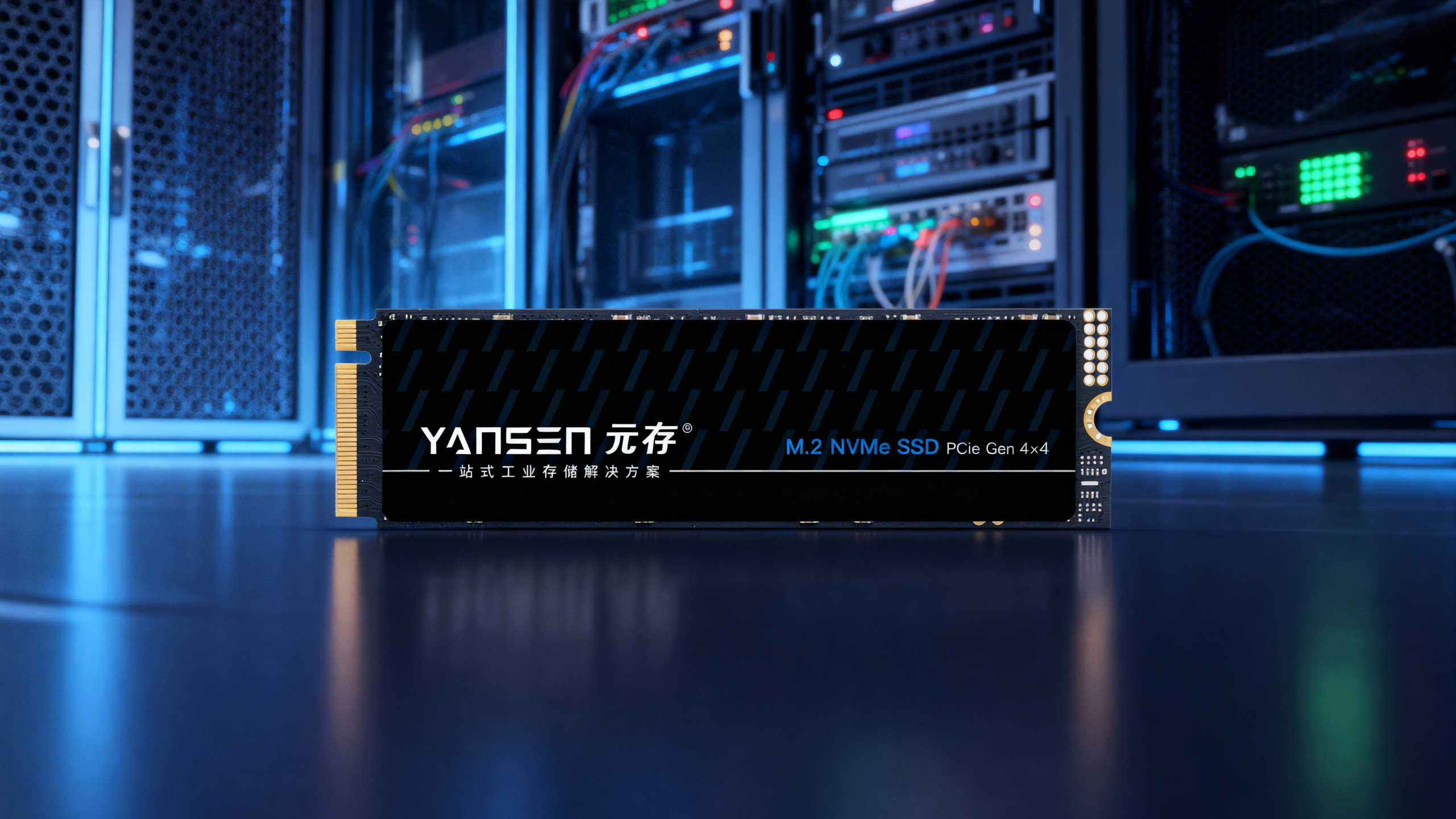
At YANSEN, we specialize in high-performance, industrial-grade SSDs designed for the most demanding drone and embedded applications.
6.1 Industrial SSD Highlights:
- 3D NAND technology with endurance up to 1 DWPD (5 years)
- Wide-temperature support(-40°C to +85°C)
- End-to-end data path protection
- AES-256 encryption & TCG Opal 2.0 compliance
- Form factors: 2.5”, mSATA, Slim SATA, M.2 2242/2280
6.2 PCIe NVMe Solutions:
- PCIe Gen4x4, NVMe 1.4 compliance
- Self-encrypting drives (SED) with TCG Opal 2.01
- Namespace management (up to 16)
- Power-loss protection (SafeDATA technology)
- Capacities up to 7.68 TB
Our SSDs are already being deployed in surveying UAVs, logistics drones, and defense-grade aerial platforms, ensuring mission success through reliable, high-speed storage.
7. Conclusion
From consumer drones filming 4K videos to industrial UAVs conducting complex surveying missions, storage is the hidden enabler of drone intelligence. Industrial SSDs provide the speed, durability, and capacity to meet the demands of high-performance drones, while industrial SD cards continue to serve lightweight applications.
As drones take on increasingly advanced roles—autonomous navigation, swarm collaboration, and AI-driven analytics—storage will evolve from being the “digital heart” into part of the drone’s intelligent brain.
And when reliability is mission-critical, YANSEN industrial SSD solutions stand ready to power the next generation of UAV innovation.
8. FAQ: Industrial SSDs in Drone Applications
Q1: Why can’t I just use a consumer SD card in my drone?
Consumer SD cards are not designed for extreme temperatures, vibration, or heavy write cycles. In professional drones, this often leads to data loss, frame drops, or outright card failure.
Q2: What capacity SSD should I choose for a surveying drone?
For lidar and mapping drones, we recommend at least 1 TB, with 2–4 TB preferred for extended missions with high-resolution imaging.
Q3: How do industrial SSDs handle power loss during flight?
Industrial SSDs like YANSEN models feature power-loss protection (PLP), which secures in-flight data even if the drone suddenly loses power.
Q4: Are industrial SSDs heavier than SD cards?
Yes, SSDs are larger and heavier, but for drones that prioritize high capacity and reliability, the tradeoff is minimal compared to the performance benefits.
Q5: Can SSDs improve drone AI performance?
Absolutely. With low-latency random access and high IOPS, SSDs enable faster AI inferencing on captured data, crucial for real-time analytics.
Q6: How long do industrial SSDs last in UAVs?
With endurance ratings like 1 Drive Write Per Day (DWPD) over 5 years, industrial SSDs can handle hundreds of terabytes written, far exceeding consumer alternatives.