When choosing storage for your system, you might wonder, “what are the 4 types of SSD?” These include SATA, NVMe, M.2, and U.2 SSDs. Each type offers unique features that impact speed, compatibility, and cost.
Understanding these differences helps you optimize performance and save money. For instance, SSDs can achieve read speeds of up to 7000MB/s, while traditional hard drives lag far behind. They also consume less power, reducing energy costs and heat generation.
SATA SSDs provide affordability and compatibility with older systems. NVMe SSDs deliver unmatched speed using PCIe. M.2 SSDs are compact and versatile, while U.2 SSDs excel in enterprise environments with their robust design.
SATA SSDs are ideal for entry-level storage, while NVMe SSDs redefine speed. M.2 SSDs fit compact builds, and U.2 SSDs balance performance and durability.
By understanding these options, you can choose the right SSD for your needs.

1. Key Takeaways
Learn about four SSD types: SATA, NVMe, M.2, and U.2. Each type has different speeds, uses, and prices.
Pick SATA SSDs if you want a cheaper option. They work well for daily tasks and older computers.
Go for NVMe SSDs if you need super-fast speeds. They connect to the motherboard and are great for gaming or editing videos.
Choose M.2 SSDs for small computer builds. They come in different sizes and work with SATA or PCIe, making them flexible.
Use U.2 SSDs for business needs. They handle heat better and are reliable for big data jobs or servers.
2. Overview of SSD Technologies
2.1 SATA SSD
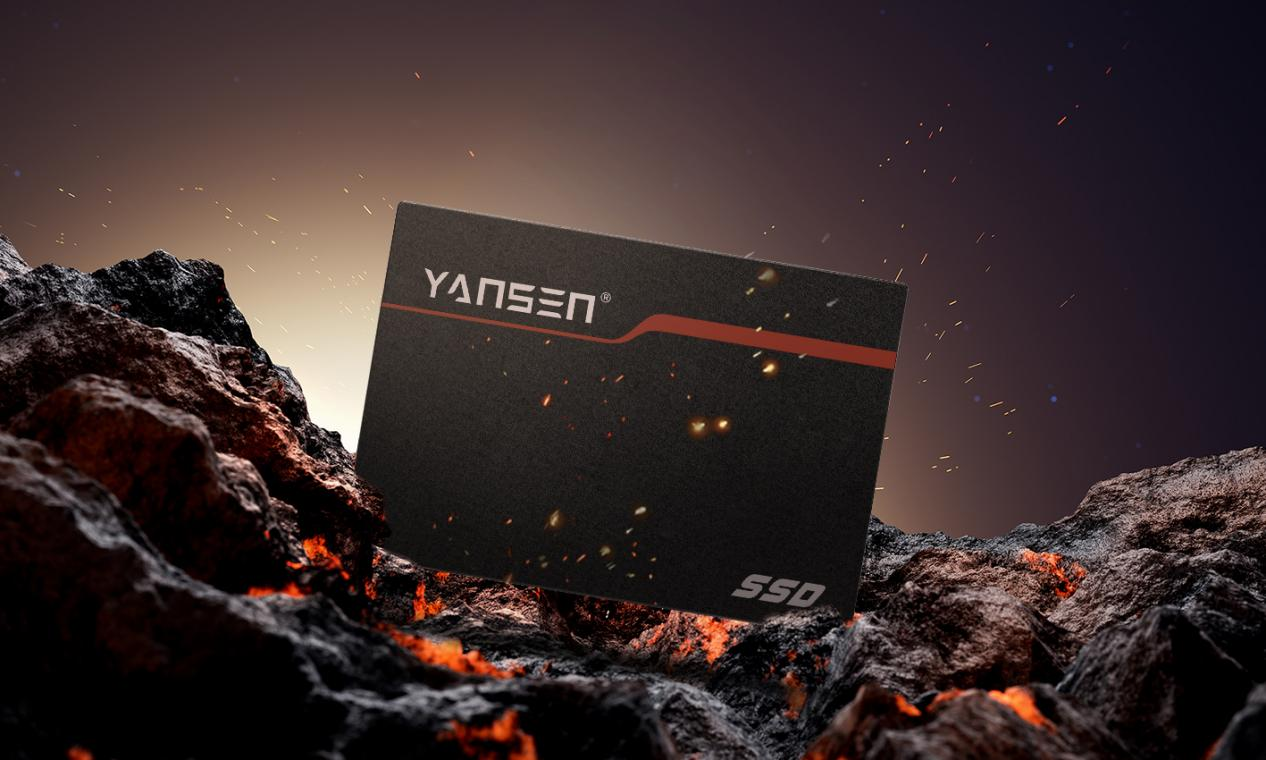
SATA SSDs are among the most common solid-state drives available today. They use the Serial ATA interface, which was originally designed for traditional hard drives. This makes them highly compatible with older systems. If you’re upgrading from a hard drive, a SATA SSD offers a noticeable improvement in speed and reliability.
One of the key advantages of SATA SSDs is their affordability. They provide three to four times the bandwidth of spinning disk hard drives, making them a budget-friendly option for everyday computing tasks. However, their performance is limited compared to other SSD types. The SATA interface introduces latency because it connects indirectly to the CPU through a cable. This restricts their maximum speed to around 12 Gb/s, which is sufficient for typical PC operations but not ideal for high-speed tasks.
For businesses looking for cost-effective storage solutions, SATA SSDs remain a reliable choice. At YANSEN, we offer a range of industrial SATA SSDs, including 2.5″ SATA and M.2 SATA SSDs, designed for durability and performance in demanding environments.
2.2 NVMe SSD
NVMe SSDs represent a significant leap in storage technology. NVMe, or Non-Volatile Memory Express, connects directly to the motherboard via a PCIe slot. This direct connection eliminates the latency associated with SATA SSDs and allows NVMe SSDs to achieve speeds up to 64 Gb/s with Gen 4 technology.
Unlike SATA, NVMe supports up to 64,000 command queues, each capable of handling 64,000 commands. This makes NVMe SSDs ideal for tasks requiring rapid data retrieval, such as video editing, gaming, and massive data transfers. For example, NVMe PCIe SSDs excel in real-world applications like video processing and fast data retrieval.
If you’re seeking cutting-edge performance, NVMe SSDs are the way to go. YANSEN’s M.2 PCIe SSDs deliver exceptional speed and reliability, making them perfect for enterprise and industrial applications.
2.3 M.2 SSD
M.2 SSDs are known for their compact design and versatility. They are available in various sizes, such as 2230, 2242, and 2280, where the numbers indicate the width and length in millimeters. This form factor makes M.2 SSDs ideal for laptops and small-form-factor PCs.
M.2 SSDs can support either SATA or PCIe interfaces. M.2 SATA SSDs offer the same performance as traditional SATA SSDs but in a smaller package. On the other hand, M.2 PCIe SSDs leverage the NVMe protocol for significantly higher speeds. Compatibility depends on the motherboard, as some sockets support only SATA, PCIe, or both.
At YANSEN, we provide a wide range of M.2 SATA SSDs and M.2 PCIe SSDs to meet diverse needs. Whether you’re building a compact system or upgrading an enterprise server, our solutions ensure reliability and performance.
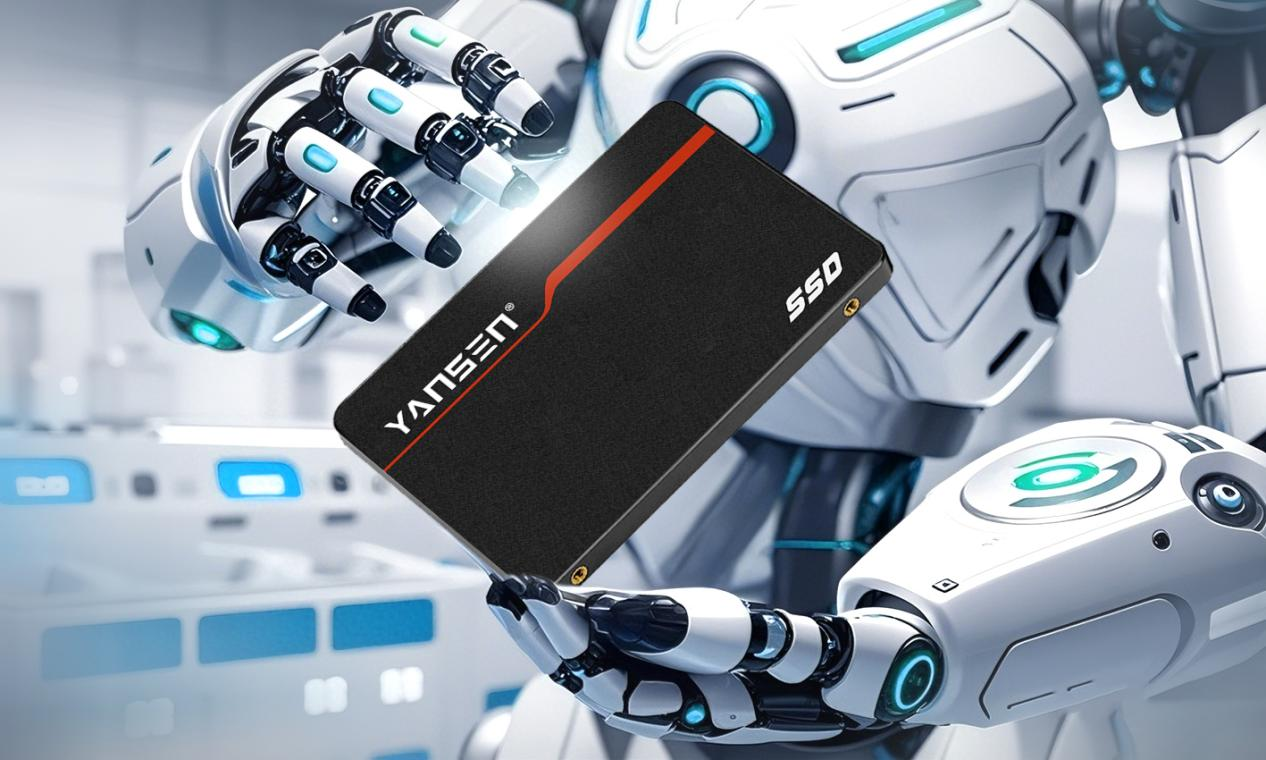
2.4 U.2 SSD
U.2 SSDs stand out as a robust storage solution, especially for enterprise environments. Unlike other SSD types, U.2 SSDs use a larger 2.5-inch form factor, which allows them to accommodate higher storage capacities. This makes them ideal for applications requiring vast amounts of data storage, such as data centers and high-performance computing systems.
One of the key advantages of U.2 SSDs is their superior heat dissipation. Their design enables them to operate at higher temperatures without throttling performance. This feature ensures consistent reliability, even under heavy workloads. Additionally, U.2 connectors take up less space on the motherboard compared to M.2 connectors, making them a practical choice for systems with limited real estate.
U.2 SSDs also excel in flexibility and compatibility. They are hot-pluggable, meaning you can insert or remove them without shutting down your system. This feature is particularly valuable in enterprise setups where uptime is critical. Furthermore, U.2 SSDs are backward compatible with traditional hard drives, allowing you to create mixed configurations that balance cost and performance.
From a performance perspective, U.2 SSDs support up to four lanes of parallel I/O. This capability enhances both speed and reliability, especially in dual-controller setups. Whether you’re managing large databases or running virtualized environments, U.2 SSDs deliver the performance you need.
At YANSEN, we offer U.2 SSDs designed for industrial and enterprise applications. Our solutions combine cutting-edge technology with exceptional durability, ensuring they meet the demands of even the most challenging environments. By choosing YANSEN, you gain access to reliable storage solutions backed by a global network of support and expertise.
If you’re looking for a storage solution that balances capacity, performance, and reliability, U.2 SSDs are an excellent choice.
3. Key Differences Between SATA, NVMe, M.2, and U.2
3.1 Speed and Performance
l SATA vs NVMe
When comparing SATA and NVMe SSDs, the difference in speed is striking. SATA SSDs offer maximum read and write speeds of up to 550 MB/s, which is sufficient for basic tasks like web browsing or document editing. However, NVMe SSDs, leveraging the PCIe connection protocol, deliver speeds exceeding 7000 MB/s. This makes NVMe SSDs ideal for high-performance tasks such as gaming, video editing, and large-scale data transfers.
Latency also sets these two apart. SATA SSDs experience higher latency due to their indirect connection to the CPU. NVMe SSDs, on the other hand, operate with significantly lower latency, thanks to their direct PCIe interface. This results in faster data transfer and improved responsiveness.
|
Feature |
SATA |
NVMe |
|
Read Speed |
Up to 550 MB/s |
3000 – 7500 MB/s |
|
Write Speed |
Up to 550 MB/s |
3000 – 7500 MB/s |
|
Latency |
Higher |
Lower |
l M.2 vs U.2
The performance of M.2 and U.2 SSDs depends on their connection protocol. M.2 SSDs using PCIe NVMe technology can achieve read and write speeds of over 5000 MB/s. U.2 SSDs, which also use PCIe, offer similar performance but excel in enterprise environments due to their robust design and better heat dissipation.
U.2 SSDs support dual-port configurations, enhancing reliability and availability in critical systems. M.2 SSDs, while compact and versatile, lack this feature. If you prioritize performance and need a compact solution, M.2 SSDs are a great choice. For enterprise applications requiring high capacity and durability, U.2 SSDs are more suitable.
|
SSD Type |
Read Speed (MB/s) |
Write Speed (MB/s) |
|
550 – 600 |
550 – 600 |
|
|
M.2 NVMe |
5000+ |
5000+ |
|
U.2 |
Similar to M.2 NVMe |
Similar to M.2 NVMe |
3.2 Form Factor and Design
l M.2 vs U.2
The M.2 form factor is compact, with dimensions ranging from 16 x 20 mm to 22 x 110 mm. This makes M.2 SSDs perfect for laptops and small-form-factor PCs. U.2 SSDs, with their 2.5-inch design, are larger but allow for higher storage capacities and better heat management.
|
Feature |
M.2 SSDs |
U.2 SSDs |
|
Form Factor |
Compact, ideal for laptops |
Larger, fits 2.5-inch bays |
|
Heat Dissipation |
Less efficient |
Better cooling |
|
Hot Swapping |
Not supported |
Supported |
l SATA vs M.2
SATA SSDs typically use a 2.5-inch form factor, making them bulkier compared to M.2 SSDs. M.2 SSDs, available in both SATA and PCIe variants, offer the same performance as SATA SSDs in a smaller package. However, M.2 PCIe SSDs outperform SATA SSDs in speed and efficiency.
3.3 Compatibility
l Motherboard and Port Requirements
Compatibility depends on your motherboard’s available ports. SATA SSDs connect via SATA cables, while NVMe SSDs require PCIe slots. M.2 SSDs need an M.2 slot, which may support either SATA, PCIe, or both. U.2 SSDs use a U.2 connector, often found in enterprise-grade systems.
l Backward Compatibility
SATA SSDs are highly backward compatible, making them suitable for older systems. They improve performance without requiring new hardware. To ensure compatibility, check your system’s ports and update firmware if necessary.
Tip: U.2 SSDs are also backward compatible with traditional hard drives, allowing mixed configurations for cost-effective upgrades.
3.4 Cost
l SATA vs NVMe Pricing
When comparing SATA and NVMe SSDs, you’ll notice a significant difference in pricing. SATA SSDs are generally more affordable, with prices starting as low as $50 for entry-level models. This affordability makes them an excellent choice for everyday tasks like web browsing, document editing, or basic storage needs. For example, 2.5″ SATA SSDs are widely available and offer a cost-effective solution for upgrading older systems.
NVMe SSDs, on the other hand, come with a higher price tag. Entry-level NVMe SSDs start around $100, but high-performance models can exceed $500. The higher cost reflects their advanced technology, including the use of PCIe interfaces and the NVMe protocol, which deliver unmatched performance. If you need faster read and write speeds for tasks like gaming, video editing, or running virtual machines, the investment in an NVMe SSD is worth it.
While SATA SSDs are budget-friendly, NVMe SSDs provide better value for performance-intensive applications. Choosing between the two depends on your specific needs and budget.
l Enterprise vs Consumer SSDs
The cost of enterprise-grade SSDs differs significantly from consumer SSDs. Consumer SSDs typically range from $50 to $500, making them suitable for personal use or light workloads. These SSDs prioritize affordability and offer sufficient performance for most users. However, they lack the advanced features and durability required for demanding environments.
Enterprise SSDs, designed for high-performance and reliability, start at $200 and can go up to $5,000. These drives include features like higher endurance, better error correction, and additional data protection mechanisms. For example, U.2 SSDs, often used in enterprise setups, provide robust performance and reliability, making them ideal for data centers and industrial applications.
|
Type of SSD |
Initial Cost Range ($) |
Reasons for Cost Difference |
|
Consumer SSDs |
$50 – $500 |
Generally cheaper, lower endurance, and fewer advanced features. |
|
Enterprise SSDs |
$200 – $5,000 |
Built for demanding tasks, higher endurance, better error correction, and additional data protection mechanisms. |
If you’re managing critical workloads or require consistent performance under heavy use, enterprise SSDs are a worthwhile investment. For everyday tasks, consumer SSDs offer a cost-effective solution.
At YANSEN, we provide a wide range of SSDs tailored to both consumer and enterprise needs. Whether you’re looking for affordable SATA SSDs or high-performance NVMe and U.2 SSDs, our solutions deliver reliability and value.
4. Use Cases and Recommendations
4.1 Everyday Users
For everyday tasks like web browsing, streaming, and document editing, you need an SSD that balances price and performance. A SATA SSD is an excellent choice for this purpose. Models like the Crucial MX500 or Western Digital Blue 3D NAND (250GB to 500GB) offer reliable performance at an affordable price. These drives provide faster boot times and smoother multitasking compared to traditional hard drives.
If you frequently handle large files, consider upgrading to an NVMe SSD. Options like the Samsung 970 EVO Plus or WD Black SN750 (1TB or more) deliver faster read and write speeds, making file transfers quicker and more efficient. For most users, a SATA SSD suffices, but an NVMe SSD can future-proof your system for more demanding tasks.
Tip: YANSEN offers a range of SATA and NVMe SSDs designed for durability and performance, ensuring you get the best value for your investment.
4.2 Gamers and Content Creators
Gaming and content creation demand high-speed storage solutions. An NVMe SSD is the best option for these scenarios. Models like the Seagate FireCuda 530 or Corsair Force MP600 (500GB or more) provide lightning-fast load times and seamless gameplay. For video editing or 3D rendering, these SSDs handle large files effortlessly, reducing project completion times.
For gamers, an NVMe SSD enhances your experience by minimizing in-game stuttering and improving responsiveness. Content creators benefit from faster rendering and exporting, which boosts productivity. If you’re building a compact gaming rig, an M.2 NVMe SSD is ideal due to its small form factor and high performance.
Note: YANSEN’s M.2 PCIe SSDs combine speed and reliability, making them perfect for gaming and creative workflows.
4.3 Enterprise and Data Center Applications
Enterprise environments require SSDs that prioritize reliability, capacity, and performance. U.2 SSDs are a top choice for these applications. They combine the speed of NVMe technology with the robust design of traditional 2.5-inch drives. This makes them compatible with existing infrastructure while delivering higher data transfer rates and lower latency.
U.2 SSDs also support hot-swapping, allowing you to replace or upgrade drives without downtime. This feature is crucial for mission-critical applications. Additionally, enterprise SSDs must meet stringent requirements, including data integrity, backup, and disaster recovery. YANSEN’s U.2 SSDs excel in these areas, offering high availability and durability for demanding workloads.
Tip: YANSEN provides enterprise-grade SSDs tailored for data centers, ensuring seamless integration and long-term reliability.
4.4 Budget-Friendly Options
When choosing an SSD on a budget, you can find several options that balance performance and affordability. For everyday tasks like web browsing or light office work, a SATA SSD is often the most cost-effective choice. These drives provide a significant speed boost over traditional hard drives without breaking the bank. Models like the Crucial MX500 or Kingston A400 are excellent examples of reliable and affordable SATA SSDs.
If you’re looking for a compact solution, consider an m.2 SATA SSD. These drives offer the same performance as standard SATA SSDs but in a smaller form factor. They are perfect for laptops or small-form-factor PCs. Many budget-friendly m.2 SATA SSDs, such as the Western Digital Blue series, deliver great value for their price.
For those who need faster speeds but still want to stay within a budget, entry-level m.2 NVMe SSDs are a great option. These drives use the PCIe interface to achieve higher read and write speeds compared to SATA SSDs. Models like the Samsung 980 or the WD SN570 provide excellent performance at a reasonable price. While they cost slightly more than SATA SSDs, their speed improvements make them a worthwhile investment for tasks like gaming or file transfers.
YANSEN offers a range of affordable SSD solutions, including m.2 SATA and m.2 PCIe SSDs, designed to meet your needs without compromising quality. As a professional SSD supplier, YANSEN ensures that even budget-friendly options deliver reliability and performance. Whether you’re upgrading an older system or building a new one, you can find an SSD that fits your budget and requirements.
Tip: Always check your motherboard’s compatibility before purchasing an SSD. Ensure it supports the type of m.2 SSD you plan to use, whether SATA or PCIe.
Choosing the right SSD depends on your needs and system compatibility. SATA SSDs offer affordability and broad compatibility, making them perfect for everyday use. NVMe SSDs deliver unmatched speed, ideal for gaming or video editing. M.2 SSDs fit compact builds, while U.2 SSDs excel in enterprise environments with better cooling and higher capacities.
Avoid common mistakes like purchasing DRAM-less or QLC SSDs, which can reduce performance and reliability. Evaluate your budget and performance requirements carefully. YANSEN provides reliable SSD solutions, from SATA to U.2, ensuring you find the perfect fit for your system.
Tip: Always check your motherboard’s compatibility before upgrading to avoid issues.
5. FAQ
5.1 What is the difference between M.2 and U.2 SSDs?
M.2 SSDs are compact and ideal for laptops or small PCs. U.2 SSDs, with their larger 2.5-inch form factor, offer better heat dissipation and higher storage capacities. U.2 drives also support hot-swapping, making them perfect for enterprise environments.
Tip: YANSEN provides both M.2 and U.2 SSDs, ensuring you find the right fit for your system.
5.2 Can I use an NVMe SSD on any motherboard?
Not all motherboards support NVMe SSDs. You need a motherboard with a PCIe slot or an M.2 slot compatible with NVMe. Check your motherboard’s specifications before purchasing.
Note: YANSEN’s experts can help you choose the right SSD for your system’s compatibility.
5.3 Are SATA SSDs still worth buying?
Yes, SATA SSDs remain a great choice for budget-friendly upgrades. They offer faster speeds than traditional hard drives and work well for everyday tasks like web browsing or office work.
Tip: YANSEN offers reliable SATA SSDs designed for durability and performance.
5.4 How do I know if my system supports U.2 SSDs?
Look for a U.2 connector on your motherboard or check its manual. U.2 SSDs are more common in enterprise-grade systems. If unsure, consult ssd manufacturer.
5.5 Why are enterprise SSDs more expensive than consumer SSDs?
Enterprise SSDs cost more because they offer higher endurance, better error correction, and advanced features like hot-swapping. These drives are built for demanding workloads and critical applications.
Tip: YANSEN’s enterprise SSDs deliver unmatched reliability and performance for industrial and data center needs.