1. Introduction – Balancing Performance and Cost
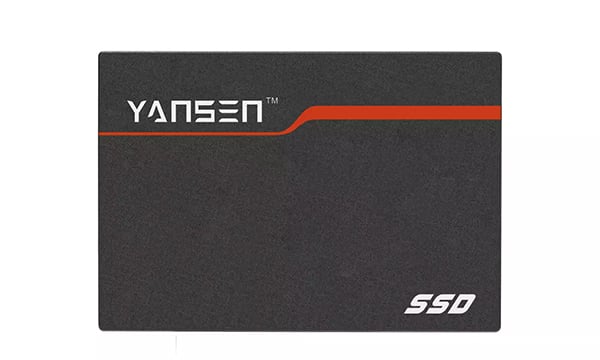
In the world of enterprise storage, decision-makers are often caught between premium performance NVMe drives and low-cost legacy HDDs. The 2.5 Inch Enterprise Value 6G SATA3 SSD offers a middle ground — delivering strong read/write speeds, reliable endurance, and broad compatibility at a cost that fits budget-conscious IT deployments.
At YANSEN, we specialize in industrial ssd and enterprise-grade SSD solutions that combine high performance, durability, and customization options for data centers, OEM manufacturers, and industrial automation.

2. Key Specifications
|
Feature |
Specification |
|
Form Factor |
2.5” |
|
Interface |
SATA III (6Gb/s) |
|
Sequential Read |
Up to 560 MB/s |
|
Sequential Write |
Up to 540 MB/s |
|
Random Read IOPS |
~95K |
|
Random Write IOPS |
~90K |
|
Endurance (DWPD) |
0.6 – 1.0 (Value Class) |
|
Capacity Range |
120GB – 4TB |
|
Operating Temperature |
-40℃~85℃ |
3. Performance in Enterprise Applications
While not as fast as PCIe or NVMe SSDs, the 6G SATA interface still offers 10x the performance of traditional HDDs for most workloads. In real-world testing, the drive performs well in:
- File Servers & Archival Systems– Quick access to large datasets without the cost of NVMe.
- Virtual Desktop Infrastructure (VDI)– Smooth user experiences in multi-session environments.
- Edge Computing– Reliable operation in compact server setups where space and power are limited.
- Industrial Controllers– Consistent performance for PLCs, SCADA systems, and embedded platforms.
4. Value Class vs. Premium Enterprise SSDs
Value enterprise SSDs like this model are designed for read-intensive and mixed workloads rather than heavy write environments. For example:
|
Usage Case |
Recommended Class |
|
Web Hosting, File Sharing |
Value SATA SSD |
|
High-Frequency Trading, AI/ML |
Premium NVMe SSD |
|
Archival Storage |
Value SATA SSD |
|
Database Transaction Logs |
Premium NVMe SSD |

5.Key advantages about 2.5 SATA
5.1 Broader Interface Compatibility and Device Adaptability
The SATA 2.5-inch interface is a traditional storage standard, pre-installed on nearly all industrial hosts, embedded devices, or legacy systems, eliminating the need for expansion cards (unlike PCIe, which requires occupying motherboard slots). For industrial scenarios requiring retrofitting/upgrading existing systems or multi-device coordination (e.g., PLCs, industrial PCs, in-vehicle terminals), SATA 2.5-inch SSDs can directly replace mechanical hard drives, reducing deployment complexity.
PCIe (especially NVMe) relies on high-speed buses and requires device support for corresponding protocols (e.g., PCIe 3.0/4.0), limiting compatibility and potentially straining slot resources for other hardware expansion.
5.2 Stronger Extreme Environment Adaptability and Superior Reliability
industrial-grade version features:
- Wide Temperature Range: -40°C to +85°C
- Enhanced Vibration Resistance
- Conformal Coating for Moisture Protection
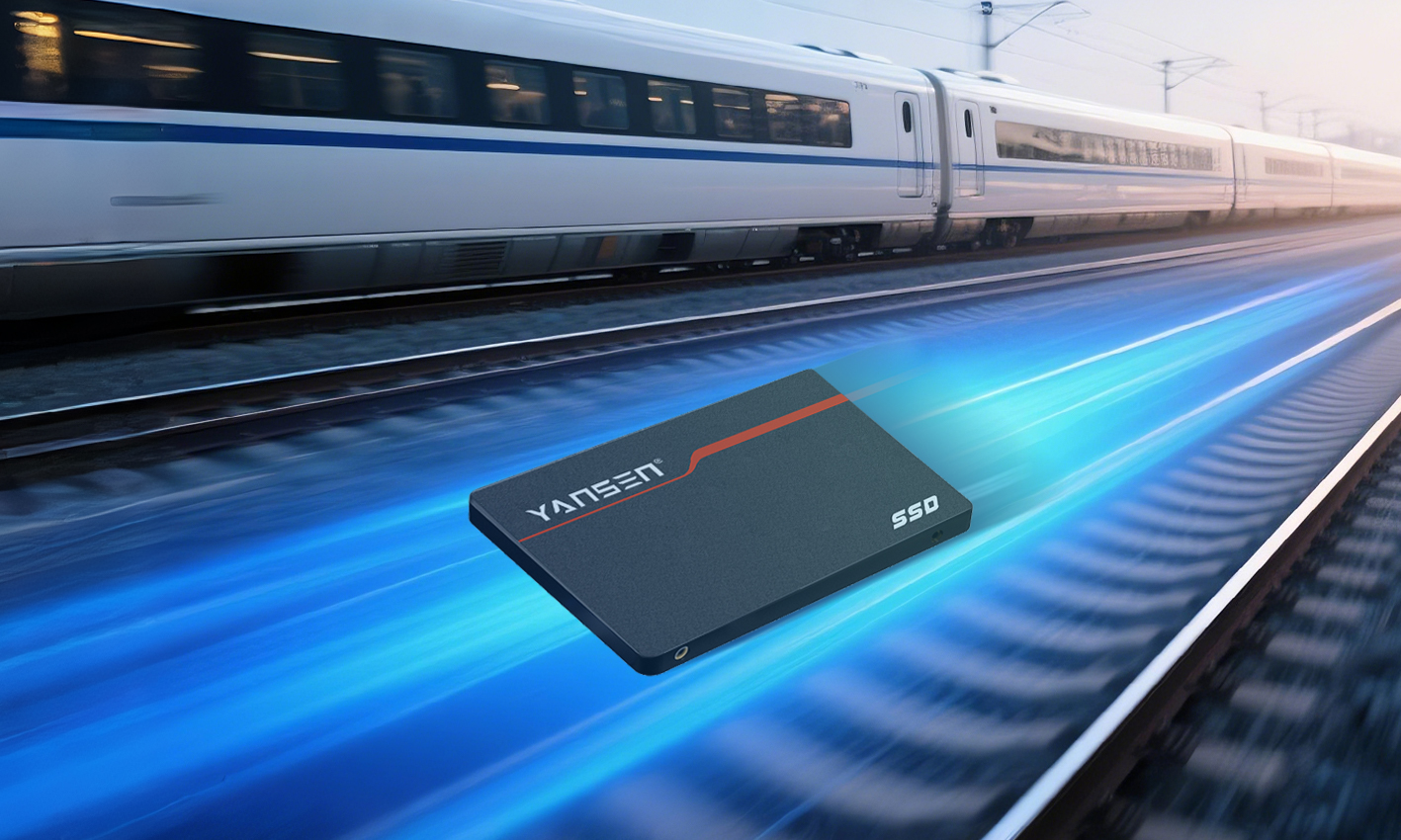
These upgrades make it suitable for military, transportation, and manufacturing automation.
Industrial-grade SATA 2.5-inch SSDs typically feature a wide temperature design (e.g., operating temperatures ranging from -40°C to 85°C) and are optimized for vibration, shock, humidity, and other industrial conditions (compliant with standards like MIL-STD-810G). In contrast, most PCIe SSDs (especially consumer-grade or light industrial-grade ones) have narrower operating temperature ranges (often 0°C to 70°C) and weaker anti-vibration/shock capabilities (lacking additional reinforcement structures). The storage NAND flash, controllers, and firmware of industrial SATA SSDs enhance error correction (e.g., LDPC ECC) and wear-leveling algorithms, with MTBF (Mean Time Between Failures) generally exceeding that of comparable PCIe products (some reaching over 2 million hours). This makes them better suited for harsh industrial environments such as high temperatures and high vibration.
5.3 More Robust Data Security and Long-Term Stability
Industrial-grade SATA SSDs commonly integrate hardware-level power loss protection (e.g., supercapacitors + Flash mapping) to ensure complete writing of cached data during sudden power outages, preventing file system corruption. Some models also support end-to-end data path protection (T2P) and automatic bad block isolation, meeting strict reliability requirements for long-term industrial data storage (e.g., medical imaging, industrial logs).
While PCIe SSDs excel in performance, some consumer-grade or entry-level products may simplify power loss protection (relying solely on software solutions), posing higher data loss risks in demanding industrial settings.
5.4 Better Cost Efficiency and High Lifecycle Value
Industrial-grade SATA 2.5-inch SSDs benefit from mature technology and large-scale production, resulting in significantly lower unit capacity costs compared to equivalent industrial-grade PCIe SSDs—especially for large capacities (e.g., 4TB and above). Their long lifespan (e.g., TBW [Terabytes Written] endurance of 200–500TB) and low maintenance needs further reduce total lifecycle costs. For budget-sensitive yet high-reliability industrial applications (e.g., surveillance storage, automated production line data caching), the SATA solution offers clearer cost advantages.
7. Ideal Customers
- SMBs & Startups– Looking for affordable but reliable SSD storage
- Cloud Service Providers– Needing high-density SATA storage arrays
- Industrial System Integrators– Deploying SSDs in embedded control systems
- Government & Defense Contractors– Requiring long lifecycle product availability
- Customizing functions:AES256 Encryption, PLP, Data erase, Write protection
8. Why Choose YANSEN
ISO-Certified Manufacturing
Global OEM Supply Capabilities
Custom Firmware & Hardware Options
Proven Track Record in Enterprise & Industrial Deployments
We’ve supplied millions of SSDs worldwide for mission-critical applications, backed by 5-year warranties and dedicated engineering support.
9. Conclusion
Summary: The core strengths of industrial-grade SATA 2.5-inch SSDs lie in extreme environment adaptability, high compatibility, low power consumption, robust data security, and cost efficiency, making them ideal for industrial scenarios prioritizing stability, adaptability, and long-term cost-effectiveness. PCIe SSDs, by contrast, excel in high-performance computing and low-latency applications (e.g., real-time data processing). Selection depends on specific industrial needs (environment, performance, cost).