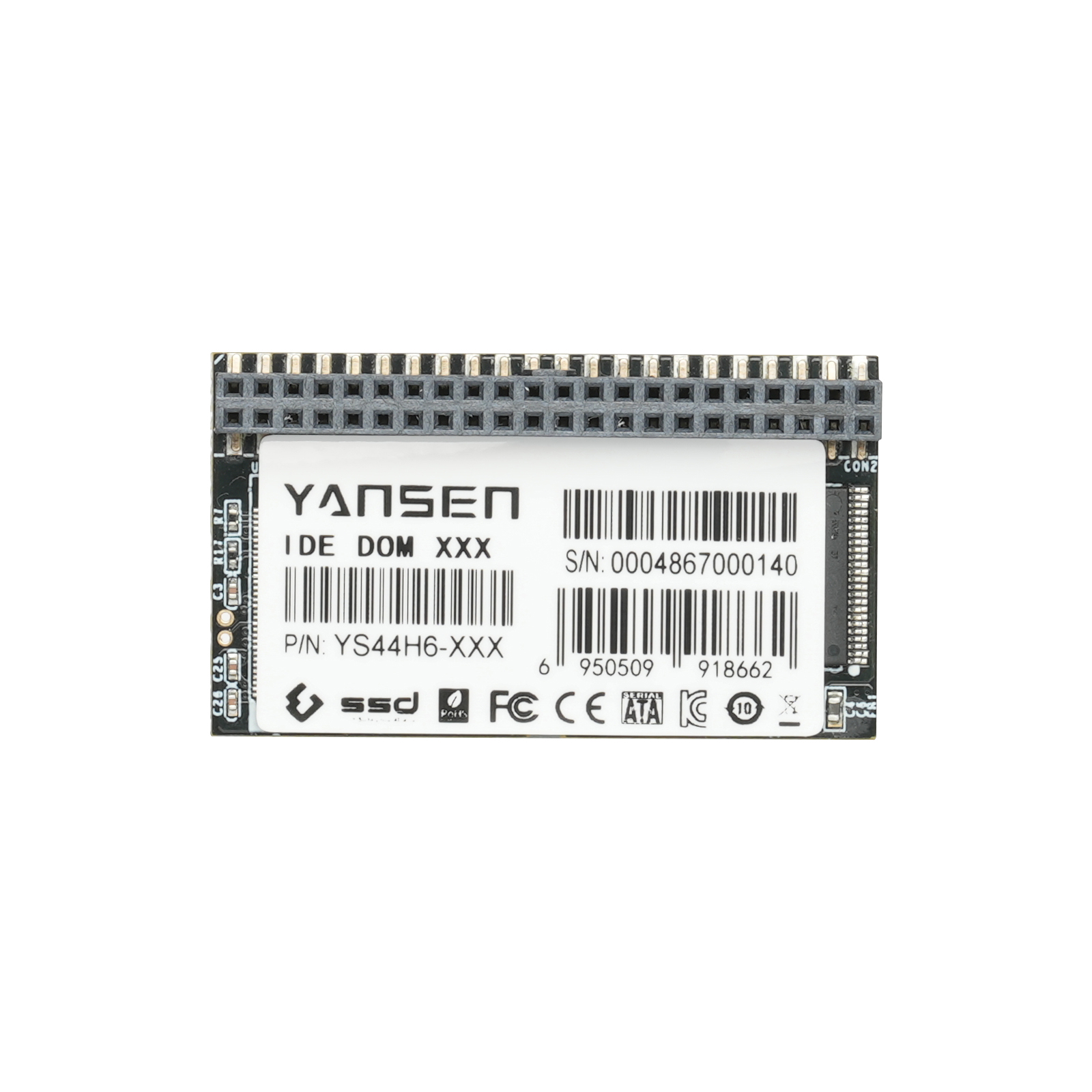
When it comes to industrial SSDs, a common question arises: “Why is the delivery of industrial-grade SSDs always slower, even though they are technically similar to consumer SSDs?”
Many industrial clients face this issue in projects that require precise timing. For example, automation projects with well-defined timelines may struggle when the industrial storage delivery is delayed. These clients are accustomed to the quick turnaround time for consumer SSDs, which are typically available in stock and ready to ship. However, the story behind industrial SSD delivery times is much more complex. Unlike consumer SSDs, the longer delivery times of industrial SSDs are not a result of inefficiency, but rather a commitment to risk mitigation.
In this article, we will explore the manufacturing and testing processes that contribute to the longer lead time for industrial SSDs, and why these SSDs are designed for long-term stability rather than immediate performance.
1. Common Industry Questions: Why is the Delivery of Industrial SSDs Slower?
The key reason behind the longer delivery times for industrial SSDs is not inefficiency but the advanced risk management protocols that are essential for industrial applications. Unlike consumer SSDs, which are built to cater to a market driven by rapid innovation and immediate availability, industrial SSDs focus on providing consistent and reliable performance over an extended period.
1.1 Real-Life Scenario:
- Automation projectsoften have strict deadlines but face delays when storage components are not available within expected timelines. Industrial clients typically expect to receive their SSD products faster, but industrial SSDs require more time due to a variety of technical factors that ensure reliability over time.
- Consumer SSDsare available in the market for immediate purchase, catering to the demand for quick solutions. In contrast, industrial-grade SSDs are customized for specific, long-term applications, which is why their production and delivery times are more extended.
1.2 Core Conclusion:
The longer delivery cycle for industrial SSDs is a reflection of the front-loaded risk management required to ensure that the products meet the highest standards of stability, durability, and long-term performance. The production target for industrial SSDs is not about being “fast,” but about being “steady, reliable, and error-free.”
2. The Starting Point: How Industrial SSD Production Differs from Consumer SSDs
The production logic of industrial-grade SSDs is drastically different from that of consumer SSDs. Let’s examine how each step in the process differs.
2.1 Higher Consistency Requirements for Raw Materials:
- NAND Flash, Controller, and industrial DRAMRequirements: In industrial SSDs, the Bill of Materials (BOM) is locked early in the production process. Components like NAND Flash, controllers, and DRAM must come from the same batch for consistency and long-term compatibility. YANSEN, for example, ensures that each batch of flash chips and controllers is verified before the project starts, reducing the risk of adjustments and delays down the line.
- Long-Term Supply Commitments:Unlike consumer SSDs, which allow rapid substitution of different NAND batches based on market price fluctuations, industrial SSDs demand 5-10 years of consistent supply. This is crucial for applications where long-term reliability is non-negotiable.
2.2 Impact on Production Timeline:
This meticulous selection process results in longer lead times for industrial SSDs. Unlike consumer products, where flash chips can be sourced quickly from multiple suppliers, industrial SSDs require validation and confirmation for each batch of components, further extending the lead time.
YANSEN Perspective: At YANSEN, we ensure that during the project initiation phase, we complete flash batch verification and controller compatibility checks to minimize uncertainty later in the production cycle. This proactive approach helps mitigate potential delays and ensures timely delivery.
3. The Real Reason for the “Slowness” in Production: It’s Not Manufacturing, It’s Validation
While manufacturing plays a key role, the validation process is the true cause of the longer delivery times for industrial SSDs. Unlike consumer-grade SSDs, industrial SSDs require more complex and customized firmware to meet the needs of specific applications.
3.1 Complex Firmware and OS Adaptation:
- Industrial Use Cases:Industrial systems require custom firmware to manage issues like power-loss protection strategies, error handling, bad block management, and write amplification control.
- Tailored Firmware Development:The firmware for industrial SSDs is not a one-size-fits-all solution. Instead, it is designed and repeatedly fine-tuned to meet the unique needs of industrial environments.
- Multi-OS Validation: Unlike consumer SSDs that are primarily optimized for Windows-based environments, industrial-grade SSDs are required to operate reliably across multiple operating systems. In real-world industrial and enterprise deployments, storage devices are often integrated into systems running Linux distributions, UNIX-based operating systems, or customized embedded OS platforms.
3.2 Impact on Production Pace:
Every time the firmware is updated or adjusted, it impacts the production rhythm. Unlike consumer SSDs, where firmware updates are simpler and less application-specific, industrial SSDs require in-depth testing and validation, which can slow down the manufacturing process.
4. Aging and Stability Testing: Uncompressed Testing Time
Testing is an essential part of industrial SSD production, and it involves a series of rigorous aging and stability tests to ensure the drives can handle extreme conditions over long periods.
4.1 Common Industrial SSD Tests:
- High/Low Temperature Startup(-40°C to +85°C)
- 24/7 uninterrupted read/write operation
- Long-Run Continuous Write/Read/Write Mix Tests
- Power Fluctuation and Unexpected Power Loss Simulation
- Vibration,Shock and Drop test
These tests often take days or even weeks, as they simulate years of real-world use in extreme environments. In comparison, consumer SSDs are usually only sample tested, focusing primarily on peak performance rather than long-term reliability.
5. How YANSEN Improves Delivery Efficiency Without Compromising Reliability
At YANSEN, we understand the critical importance of balancing reliable delivery times with high-quality standards. That’s why we have taken steps to improve our internal processes without cutting corners on quality.
5.1 Self-Developed SSD Testing System:
- Multi-Drive Parallel Testing
- Parallel Multi-Condition Testing
- Realistic Industrial Workload Models Simulation
Our proprietary testing solutions allow us to perform parallel tests on multiple conditions, significantly enhancing testing efficiency without sacrificing reliability. By having full control over the testing process, we also avoid long waiting times associated with third-party testing services.
5.2 Integrated Multi-Testing:
Built for industrial-grade SSD mass production and power-loss protection (PLP) validation, our self-developed intelligent testing system, supports one-click completion of the entire SSD testing process, enables manufacturers to standardize and scale their reliability testing with confidence.
By integrating high/low temperature testing, environmental stress testing, power-loss scenarios, protocol verification, and data integrity validation into a single automated platform, it ensures every SSD leaving the production line meets strict industrial and aerospace reliability requirements.
Brand Summary: At YANSEN, we prioritize heavier testing in exchange for more reliable deliveries. Our investment in self-developed testing platforms ensures that every industrial SSD meets stringent quality standards, with predictable and timely delivery.
6. Choosing Between Speed and Reliability in Delivery Cycles
For industrial clients, the cost of system downtime far exceeds the cost of waiting for reliable components. While it may seem that faster delivery is better, industrial SSDs are about long-term stability and ensuring that future risks are mitigated.
Key Points:
- SSDs are not one-time purchases for industrial systems.
- The cost of downtimeis far greater than the wait time for reliable SSDs.
- The “slowness” of industrial SSD delivery ensures system stability, long-term project success, and on-site reliability.
7. Conclusion: Quality Over Speed
The longer delivery time for industrial SSDs is not a result of slow manufacturing but rather a commitment to reliability. At YANSEN, we focus on providing high-quality industrial SSDs that undergo rigorous testing and validation to meet the most demanding applications. By using customized testing equipment and integrated production processes, we ensure that our products are delivered on time without compromising quality.
YANSEN offers industrial SSD solutions that cater to high-reliability, long-term performance, and cost-effective solutions for enterprise customers. Contact us today to learn more about how we can support your industrial storage needs.