Introduction: The Current Landscape of Data Storage in the Digital Age
In today’s rapidly evolving digital world, data generation is growing at an exponential rate across all industries. From healthcare and finance to manufacturing and energy, the sheer volume of data is overwhelming traditional storage systems, creating significant challenges for businesses striving to manage and process this information efficiently. Traditional storage devices like Hard Disk Drives (HDDs) are often ill-equipped to handle this influx of data due to their slower read/write speeds, mechanical limitations, and susceptibility to failure under harsh environments.
This is where high-performance storage technologies—particularly industrial solid-state drives (SSDs)—become essential. These storage solutions are specifically designed to meet the demands of industries dealing with vast quantities of data and need solutions that can perform at the highest levels of efficiency and reliability. In this article, we explore how industrial SSDs are revolutionizing storage capabilities across multiple sectors, enabling companies to stay competitive in the digital age.
1. The Technical Essence of Industrial Solid-State Drives
1.1 Breakthrough Flash Memory Technology
One of the key features driving the success of industrial SSDs is the advanced NAND flash technology. The introduction of 3D NAND technology has allowed for significant improvements in storage density. By stacking layers of memory cells on top of each other, 3D NAND enables SSDs to store more data in a smaller footprint, resulting in larger capacities without compromising on performance. This breakthrough allows industrial SSDs to offer high-speed data access while managing larger datasets in increasingly constrained physical spaces.
Moreover, flash memory’s inherent characteristics—such as faster read/write speeds—enhance overall system performance. With industrial SSDs, organizations can expect up to 10 times faster data transfer rates compared to traditional hard drives, significantly improving workflow efficiency and reducing data bottlenecks in critical applications.
1.2 The Role of Intelligent Controllers
At the heart of every industrial SSD lies a high-performance controller that manages data access and ensures seamless data transmission between the storage device and the system. These controllers use sophisticated algorithms to perform complex tasks such as wear leveling, error correction, and data encryption. By efficiently managing data traffic, they ensure that SSDs maintain optimal performance and reliability over extended periods of use.
Controllers are particularly vital in industrial settings where workloads involve heavy read/write operations. Advanced algorithms like LDPC (Low-Density Parity-Check) help correct errors during data transmission, thus ensuring that data integrity is never compromised—especially important in sectors like healthcare or finance where data accuracy and security are paramount. End to End Data Protection and RAID-grade ECC technologies are also critical in industrial applications.
1.3 Durability and Reliability
One of the greatest challenges in many industrial sectors is the presence of harsh environments. Unlike traditional HDDs, which are prone to mechanical failure due to moving parts, industrial SSDs are shock-resistant, vibration-resistant, and able to operate in extreme temperatures(Industrial Grade: -40°C to +85°C, Military/Aerospace Grade: -55°C to +125°C). These characteristics make industrial SSDs ideal for use in applications where HDDs might fail, such as in manufacturing plants, outdoor energy installations, or even medical environments.
Moreover, industrial SSDs integrate data protection technologies such as ECC (Error Correction Code) and end-to-end data protection to prevent data loss or corruption. These features ensure that critical data remains safe, even in the event of power loss or unexpected shutdowns.
2. Transformative Applications Across Various Sectors
2.1 Industrial Manufacturing
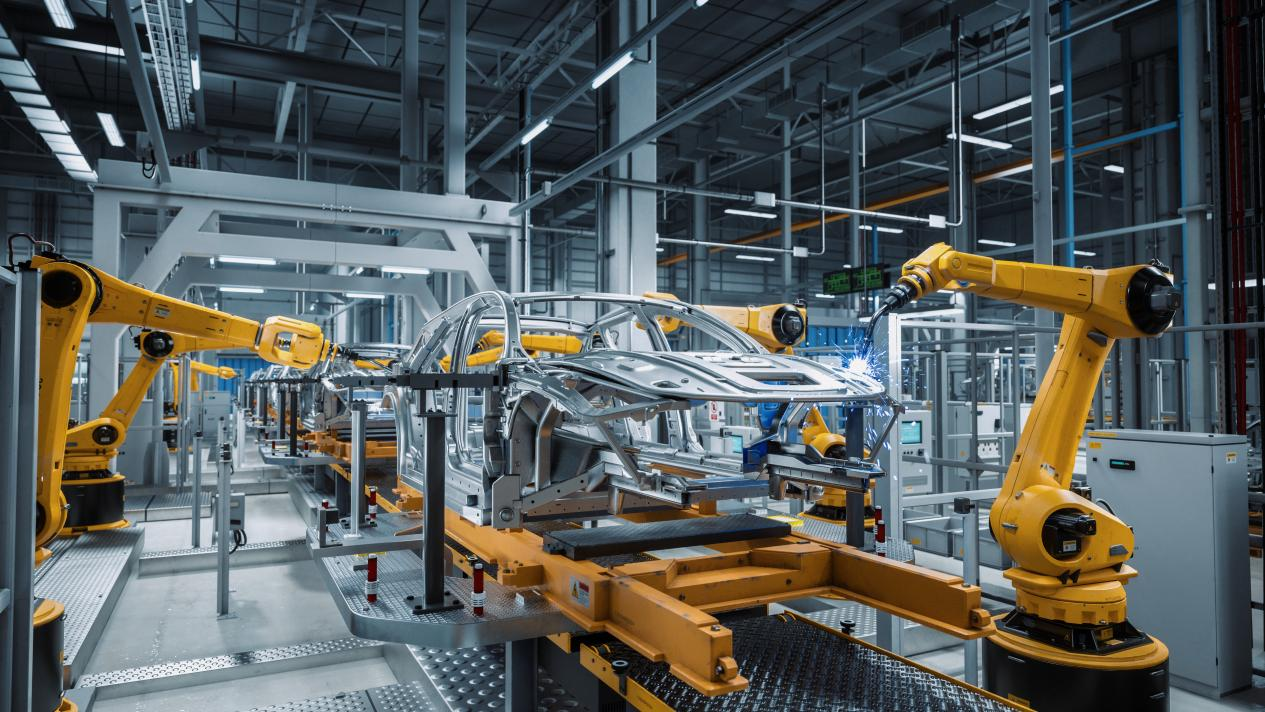
In the field of industrial manufacturing, automation is at the core of productivity. Industrial SSDs play a critical role in supporting real-time production data capture and storage. These devices enable rapid data processing and immediate feedback to operators, leading to faster decision-making and optimized production cycles. Furthermore, industrial SSDs are integral to the Industrial Internet of Things (IIoT), where interconnected devices rely on fast, reliable storage to communicate and collaborate seamlessly. As a result, industrial SSDs help improve operational efficiency, product quality, and overall profitability.
2.2 Revolutionizing Healthcare
In the healthcare industry, medical imaging equipment such as CT scans and MRIs generate vast amounts of data that need to be stored and accessed in real-time. Industrial SSDs enable fast storage and retrieval of high-resolution medical images, ensuring that healthcare professionals can make quick diagnoses. These storage solutions also support hospital information systems, safeguarding patient records, test results, and treatment histories, ensuring data is always readily accessible and secure.
The rapid read/write speeds of SSDs also make it easier to process and analyze large datasets, which is crucial in the growing field of personalized medicine and genomic research.
2.3 Driving Smart Transportation
The automotive industry, particularly with the rise of autonomous vehicles, has become increasingly dependent on high-performance storage solutions. Industrial SSDs are essential for storing data from a multitude of sensors and cameras used in autonomous driving systems. These devices record real-time vehicle and environmental data, such as GPS coordinates, vehicle performance metrics, and hazard detection, ensuring that the autonomous system can make decisions quickly and accurately.
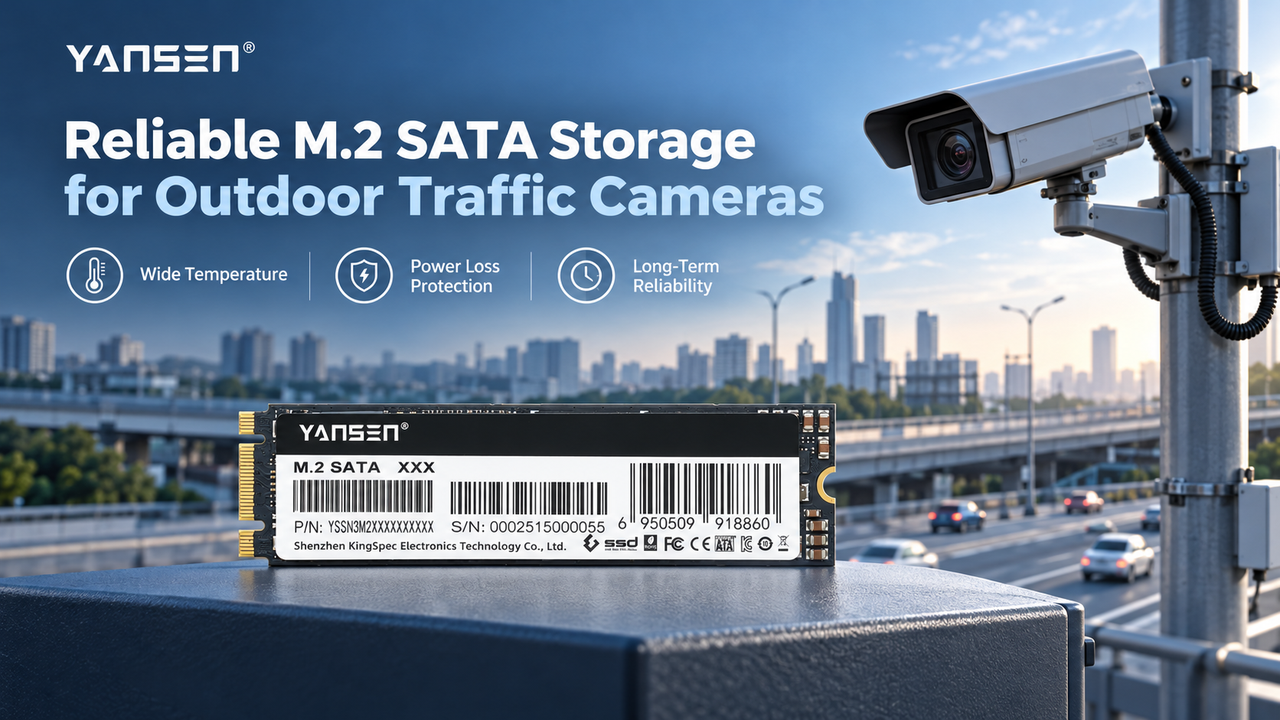
Moreover, industrial SSDs are also used in intelligent transportation systems (ITS), which manage traffic monitoring and smart parking solutions. The rapid data processing capabilities of industrial SSDs are instrumental in managing large-scale infrastructure data efficiently.

2.4 Supporting the Energy Sector
The energy industry, particularly in oil and gas exploration and smart grid management, requires robust and reliable data storage solutions. Industrial SSDs are deployed in exploration equipment to store crucial geological data and real-time sensor data that are essential for efficient energy production and management. Moreover, industrial SSDs are vital in power grid monitoring systems, ensuring that the flow of data related to energy usage and grid stability is stored and analyzed without delay, ultimately supporting energy efficiency and security.
3. Comparing Industrial SSDs to Traditional Storage Solutions
3.1 Performance Differences
One of the primary advantages of industrial SSDs over traditional HDDs is their superior read/write speeds. SSDs offer faster data access and higher throughput, particularly for random data reads and writes. The faster performance of SSDs translates directly into improved business workflows, enabling organizations to access and process data quickly—critical for real-time applications.
3.2 Stability and Reliability
Unlike HDDs, which contain moving parts susceptible to wear and tear, industrial SSDs have no mechanical components, significantly reducing the risk of mechanical failure. Moreover, the multi-layered data protection mechanisms integrated into SSDs, including wear leveling and ECC, guarantee data integrity even in challenging environments.
3.3 Total Cost of Ownership (TCO)
While industrial SSDs may have a higher initial purchase price compared to HDDs, their total cost of ownership (TCO) is often lower in the long run. SSDs offer lower power consumption, reduced maintenance needs, and longer lifespans. Furthermore, their higher performance reduces the need for costly upgrades or downtime, leading to overall savings for businesses.
4. Future Trends and Innovations
4.1 Technological Advancements
Looking forward, the evolution of industrial SSDs will likely focus on increasing storage density, improving energy efficiency, and further boosting data read/write speeds. Emerging technologies such as 3D NAND and memristor-based storage are expected to drive these innovations, enabling industrial SSDs to handle even larger datasets at greater speeds.
4.2 Expanding Applications
As industries like AI, blockchain, and edge computing continue to grow, the demand for high-performance storage solutions like industrial SSDs will skyrocket. These sectors require rapid data processing and low-latency storage, making industrial SSDs the perfect fit. The ongoing digital transformation across all industries is poised to expand the use cases for industrial SSDs even further.
5. Conclusion: Embracing the Future of High-Performance Storage
In conclusion, industrial SSDs are at the forefront of the storage revolution, offering unmatched performance, reliability, and cost-efficiency. Their integration into critical sectors such as manufacturing, healthcare, transportation, and energy is changing the way data is stored, processed, and analyzed. As technology continues to evolve, industrial SSDs will play an even more central role in driving innovation and digital transformation across industries.
For businesses looking to stay competitive in the face of exponential data growth, embracing industrial SSD technology is no longer optional—it’s a necessity for future-proofing their operations.