The industrial storage market is evolving rapidly, driven by the increasing need for high-performance, reliable, and efficient data storage solutions. This transformation is largely influenced by the advent of edge computing and artificial intelligence (AI). These developments are shaping the future landscape of industrial storage, promising significant advancements and presenting unique challenges.

The Evolution and Demand for Edge Computing
Edge computing refers to the processing of data near the source of generation rather than in a centralized data-processing warehouse. This approach is particularly crucial in industrial applications where real-time data processing is required.
In industries such as manufacturing and energy management, edge computing enables quicker decision-making by reducing latency and bandwidth usage. For instance, in manufacturing, edge computing can be used for real-time monitoring and predictive maintenance of machinery, thereby minimizing downtime and improving efficiency.
Specific Storage Requirements
Edge computing demands storage solutions that offer high performance, reliability, and low latency. This is because data needs to be processed and stored close to its source. High-performance solid-state drives (SSDs) are critical in meeting these requirements. Global enterprise like Samsung and Micron are leading the development of such advanced storage solutions.
Case Studies
- Manufacturing: Edge computing plays a crucial role by enabling real-time monitoring and control of production lines. This technology involves deploying computing resources close to the physical devices and machinery. Sensors and IoT devices continuously collect data. Edge computing processes this data locally, allowing for immediate analysis and response.
- Energy Management: Edge computing can dynamically adjust lighting, heating, and cooling systems based on occupancy and environmental conditions, optimizing energy use. This localized data processing not only leads to significant cost savings but also improves energy efficiency and sustainability.
The Rise of AI and Its Impact on Storage Needs
AI technologies are being increasingly adopted in industrial applications, leading to a surge in data generation and processing requirements.
AI is used in various industrial applications such as predictive maintenance, quality control, and automation. For example, AI-driven predictive maintenance can foresee equipment failures before they happen, thus avoiding costly downtime.
Storage Challenges
AI applications require storage solutions that can handle large volumes of data with high-speed read/write capabilities and durability. The need for low latency and high throughput is paramount, especially in applications involving real-time data analytics and machine learning.
Case Studies
- Predictive Maintenance: AI systems analyze vast amounts of data from sensors to predict equipment failures. Edge computing allows for immediate alerts and maintenance actions, minimizing downtime and extending equipment life.
- Quality Control: AI algorithms inspect products in real-time, necessitating storage solutions that can rapidly process high-resolution images and videos. Edge computing processes this visual data on-site, using AI algorithms to identify defects and deviations from quality standards instantly, thereby reducing waste and improving overall product quality.

Technological Innovations in Storage Devices
To meet the growing demands of edge computing and AI, the industrial storage sector is witnessing several technological innovations.
Future Development
- NVMe (Non-Volatile Memory Express): The NVMe protocol is specifically designed for flash memory technology, offering lower latency and higher throughput compared to traditional SATA and SAS interfaces. NVMe over Fabrics (NVMe-oF) further enhances this by transmitting NVMe commands over a network, thereby improving the scalability and performance of storage systems.
- PCIe 5.0/6.0: The latest PCIe 5.0 and the forthcoming PCIe 6.0 standards provide increased bandwidth and reduced latency, delivering faster data transfer speeds for industrial-grade applications.
- E-MLC (Enterprise Multi-Level Cell) and eTLC (Enterprise Triple-Level Cell): These technologies enhance data storage by offering greater durability and reliability, making them suitable for industrial environments that require high write endurance and long operational life.
Application of New Materials, Architectures, and Interfaces
Innovations in storage materials, architectures, and interfaces are crucial for enhancing performance and efficiency. 3D NAND technology, which increases storage density and reduces costs, is a key development. Emerging materials like resistive RAM (ReRAM) and phase-change memory (PCM) promise faster and more durable storage solutions.
PCM (Phase-Change Memory) technology is widely studied as a potential alternative or complement to NAND flash and DRAM technologies. PCM technology holds significant potential, particularly in applications requiring high speed, low latency, and high durability, such as cache storage, embedded systems, high-performance computing, and enterprise storage solutions.
ReRAM (Resistive RAM) stores data by altering resistance values. ReRAM offers faster read and write speeds, lower power consumption, and longer durability. The characteristics of ReRAM make it suitable for use in embedded systems and Internet of Things (IoT) devices. ReRAM also shows potential as a cache or acceleration storage solution. As technology progresses and costs decrease, ReRAM is expected to become a mainstream storage solution.
New architectures, such as computational storage and storage-class memory (SCM), integrate processing capabilities directly into storage devices, reducing data movement and improving efficiency.
Advancements in interfaces like PCIe 5.0 and 6.0 enable faster data transfer rates, crucial for applications requiring low latency and high throughput.
Future Opportunities and Challenges
The integration of edge computing and AI in industrial storage presents both opportunities and challenges.
Market Growth
The global data storage market is projected to grow significantly, driven by the increasing digitization across various industries and the growing volume of data generated by AI and edge computing applications. The market is expected to expand at a compound annual growth rate (CAGR) of 26% from 2024 to 2032.
Competitive Landscape
The industrial storage market is highly competitive, with key players like Intel, Samsung, and Western Digital continuously innovating to maintain their market positions. Collaboration and strategic partnerships will be crucial for companies to leverage new technologies and meet evolving market demands.
Conclusion
The industrial storage market is on the brink of a transformative era, driven by the demands of edge computing and AI applications. As the market evolves, companies will need to innovate continuously to keep pace with the changing needs and to capitalize on the opportunities presented by this dynamic environment.
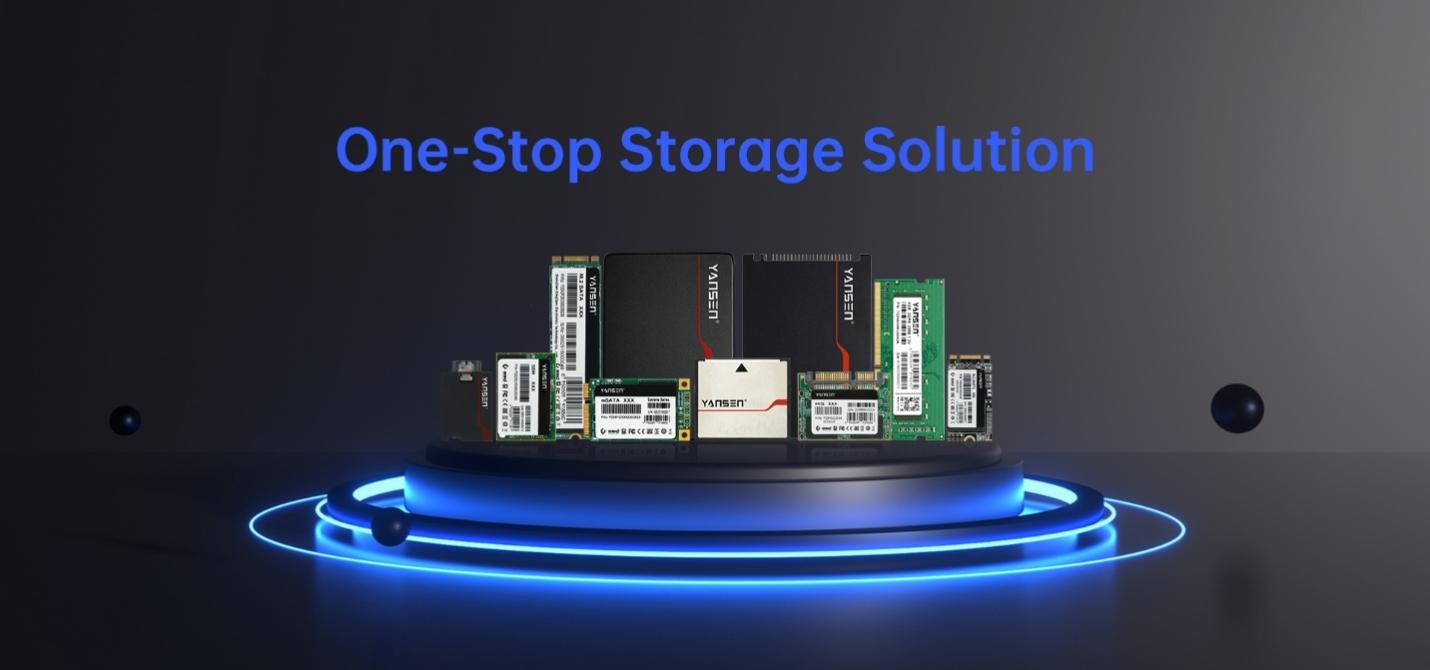
For more robust and reliable industrial storage solutions, YANSEN offers a comprehensive range of products tailored to meet the specific needs of industrial applications. Visit YANSEN Industrial Storage Solutions to learn more.
References
- Mordor Intelligence. (2022). Solid State Drive (SSD) Market Share – Industry Manufacturers & Size. Retrieved from www.mordorintelligence.com
- Expert Market Research. (2024). Data Storage Market Size, Share, Growth Forecast | 2032. Retrieved from www.expertmarketresearch.com