1. The Critical Role of SSDs in Modern Enterprises
In today’s data-driven world, businesses increasingly rely on advanced storage solutions to manage and process large volumes of data efficiently. Solid-State Drives (SSDs) have revolutionized the way data is stored and accessed, providing faster, more reliable storage compared to traditional Hard Disk Drives (HDDs).
Enterprise SSDs are high-performance storage devices engineered specifically for enterprise-level applications.
Unlike consumer-grade SSDs, which are designed for general use in personal computers, enterprise SSDs are built to handle the heavy workloads and constant data access demands of business operations. Key characteristics of enterprise SSDs include superior endurance, high reliability, low latency, and advanced power-loss protection mechanisms.
While consumer SSDs are suitable for everyday tasks like gaming, browsing, and file storage, enterprise SSDs are optimized for critical applications such as data centers, high-performance computing, and cloud services, where data integrity and uptime are paramount.

2. Key Features and Specifications of Enterprise SSDs
① Performance Metrics:
Enterprise SSDs deliver exceptional performance in terms of IOPS (Input/Output Operations Per Second), throughput, and latency. These metrics are crucial for applications that require rapid data processing, such as real-time analytics, AI, and large-scale databases.
② Endurance and Reliability:
Enterprise SSDs are designed to endure constant read/write cycles without compromising performance. They feature advanced wear leveling algorithms, high TBW (Terabytes Written), and MTBF (Mean Time Between Failures) ratings, ensuring longevity and consistent performance even under heavy workloads.
③ Security Features:
Security is a top priority in enterprise environments. Enterprise SSDs often come with built-in encryption, secure data erasure capabilities, and compliance with industry standards such as TCG Opal and FIPS 140-2, safeguarding sensitive business data from unauthorized access.
④ Power-Loss Protection:
One of the standout features of enterprise SSDs is their ability to protect data during unexpected power outages. Power Loss Protection (PLP) is a technology in SSDs that safeguards data during unexpected power failures by using stored energy to complete in-progress writes, ensuring data integrity and reliability, especially in enterprise environments. Through the use of capacitors and firmware that ensures data is safely written to non-volatile memory, enterprise SSDs prevent data corruption and loss.
3. Types of Enterprise SSDs
Enterprise SSDs come in various types, each suited to different use cases and applications:
① SATA SSDs:
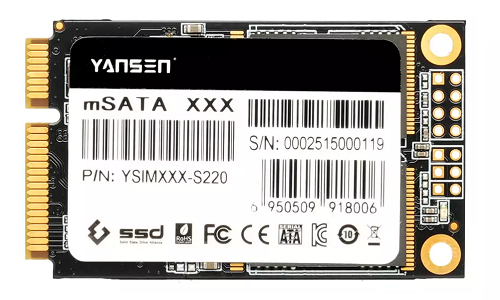
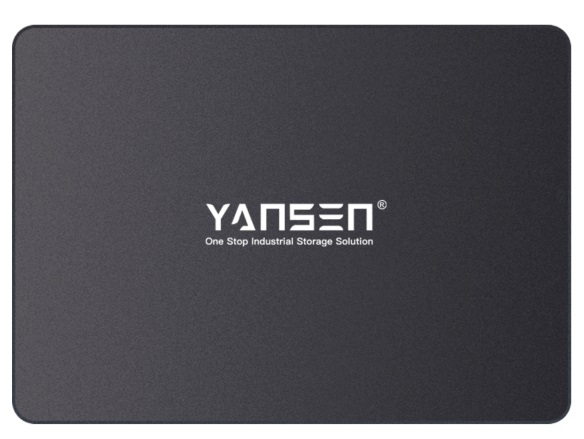
There are different forms of SATA interfaces, such as SATA, mSATA, 2.5″SATA, mini-mSATA, B-key M.2, etc. While slower compared to other types, SATA SSDs are still widely used due to their cost-effectiveness and compatibility with existing infrastructures.
② NVMe SSDs:
NVMe SSDs provide unparalleled speed and are ideal for applications requiring the lowest latency, such as high-frequency trading and big data processing.
These SSDs are available in different form factors, including 2.5″, M.2, and U.2, allowing businesses to choose the best fit for their servers and storage arrays.
③ U.2 SSDs:
U.2 SSDs are based on the NVMe protocol but utilize a more robust, enterprise-grade U.2 interface, making them ideal for high-density storage and rack-mounted servers. They are commonly used in data centers and enterprise servers, particularly suited for mixed storage environments and high-performance computing tasks.

4. The Advantages of Using Enterprise SSDs
①Enhanced Data Security:
With features like hardware-based encryption and secure data erasure, enterprise SSDs ensure that sensitive information remains protected from breaches and unauthorized access.
②Improved System Performance and Efficiency:
By minimizing bottlenecks and reducing latency, enterprise SSDs significantly improve the performance of data-intensive applications, leading to faster processing times and more efficient operations.
③Lower Total Cost of Ownership (TCO):
Although enterprise SSDs come with a higher upfront cost, their longevity, reliability, and reduced maintenance needs result in lower total cost of ownership over time.
④Scalability and Flexibility:
As businesses grow, so do their data storage needs. Enterprise SSDs offer the scalability to meet these demands, allowing companies to expand their storage capacity and performance without compromising on quality.
5. Considerations When Choosing an Enterprise SSD
When selecting an enterprise SSD, businesses must consider the balance between cost and performance. It’s essential to assess the specific needs of your business and choose an SSD manufacturer that provides the best value for your investment.
Compatibility with existing infrastructure is another crucial factor. Ensure that the chosen SSDs are compatible with your current systems and can be easily integrated without significant changes.
YANSEN is laying out its product line for enterprise level SSDs, providing solutions with multiple interfaces and capacity options that are suitable for enterprise level application scenarios.