1. Introduction: The Rise of Medical AI Imaging and the Storage Challenges
In recent years, the global healthcare industry has undergone a profound digital transformation, with artificial intelligence (AI) emerging as one of the most disruptive forces, particularly in medical imaging. AI’s application in healthcare is not just a technological trend but a significant evolution that is reshaping how medical professionals diagnose and treat patients. From diagnostic tools like CT scans, MRI, and X-rays to more sophisticated imaging techniques, AI-powered technologies are enhancing the precision and efficiency of these systems. For instance, AI algorithms are now capable of identifying anomalies in images, suggesting diagnoses, and even predicting disease progression, which allows for more accurate, timely, and tailored patient care.
As the capabilities of AI technologies in medical imaging expand, however, so does the data they generate. The medical imaging industry is witnessing a data explosion, with images becoming more detailed, larger in file size, and more numerous. This results in an increasing demand for advanced enterprise storage solutions. To put it into perspective, a single MRI scan can generate upwards of several gigabytes of data, and with the rapid advancement of high-resolution imaging technologies, the file sizes can continue to grow. These large data sets pose significant challenges for traditional storage systems, which are ill-equipped to manage such high volumes of information at the required speeds.
1. The High Demands of Medical AI Imaging on Storage Devices
The storage demands of medical AI imaging are multifaceted, encompassing not only massive data storage requirements but also the need for real-time data processing. AI-powered medical imaging systems are designed to help healthcare professionals make fast, accurate decisions, and delays in data retrieval can have serious implications for patient outcomes. For example, if a CT scan image takes too long to load or process, there is a risk that the healthcare provider may not be able to diagnose and treat a critical condition in time, which could lead to significant patient harm.
The importance of fast data processing and high-capacity storage cannot be overstated in the context of modern healthcare. With medical imaging technologies continuously evolving and increasing in complexity, storage devices must be capable of handling extremely large datasets in real-time, ensuring that no delays occur during the analysis of images. The need for high-speed data transmission is paramount, and traditional hard disk drives (HDDs) are simply not capable of delivering the necessary performance. As a result, solid-state drives (SSDs) have emerged as a more viable solution, offering high read/write speeds and low latency, which are essential for medical AI imaging systems.
Additionally, the security and reliability of medical data are critical. With patient privacy and data protection regulations such as HIPAA in the U.S. and GDPR in the European Union, the need for secure storage solutions is more important than ever. Storing and transmitting sensitive medical data in an encrypted format ensures that it remains confidential and protected from unauthorized access. Storage devices must also offer high availability and durability, with robust data protection mechanisms like power-loss protection and error-correction technology, to ensure that data remains safe and intact throughout its lifecycle.
2. Industry Trends: AI Imaging Drives the Upgrade of Medical Storage Technology
2.1 Storage Pain Points in Medical AI Imaging
As AI continues to play an increasingly critical role in medical imaging, healthcare providers are facing unique challenges when it comes to managing and storing imaging data. Traditional storage solutions are no longer sufficient to meet the needs of modern medical institutions, and the demand for advanced storage systems has never been higher. Below are the most pressing storage challenges faced by the medical AI imaging sector:
- Massive Data Storage Needs: The speed and volume of data generated by medical AI imaging systems are far greater than what traditional storage systems can handle. For example, in large hospitals and imaging centers, medical imaging data can quickly reach terabytes per day. This exponential data growth puts immense pressure on conventional hard disk drives (HDDs), which struggle to keep up with both the sheer volume and speed requirements of modern healthcare. HDDs, being mechanical in nature, are not designed to handle the high I/O demands required by AI imaging applications, leading to bottlenecks and slower performance.
- Real-Time Analysis Requirements: AI-based medical imaging systems must be able to process vast amounts of data in real-time to provide accurate, timely diagnostics. This means that any delays in data retrieval or processing could lead to missed diagnoses, slower treatment times, and potentially dire consequences for patients. For example, during emergency situations, such as stroke or trauma cases, delays in reading imaging data could mean the difference between life and death. Therefore, healthcare institutions must invest in storage solutions that offer high throughput, low latency, and the ability to process data instantly without any bottlenecks.
- Data Security and Compliance: Medical data is inherently sensitive, and strict regulations around data protection, such as HIPAA in the United States and GDPR in Europe, mandate that healthcare organizations protect patient data from unauthorized access, loss, or alteration. Any breach in data security can have serious legal, financial, and reputational consequences. Therefore, healthcare organizations need storage solutions that not only support encryption and data protection measures but also ensure compliance with these regulations. Additionally, healthcare organizations must safeguard against cyber-attacks and data tampering, which require storage devices with advanced security features such as secure data erasure and real-time data monitoring.
2.2 The Core Value of Industrial-Grade SSDs in Medical AI Imaging
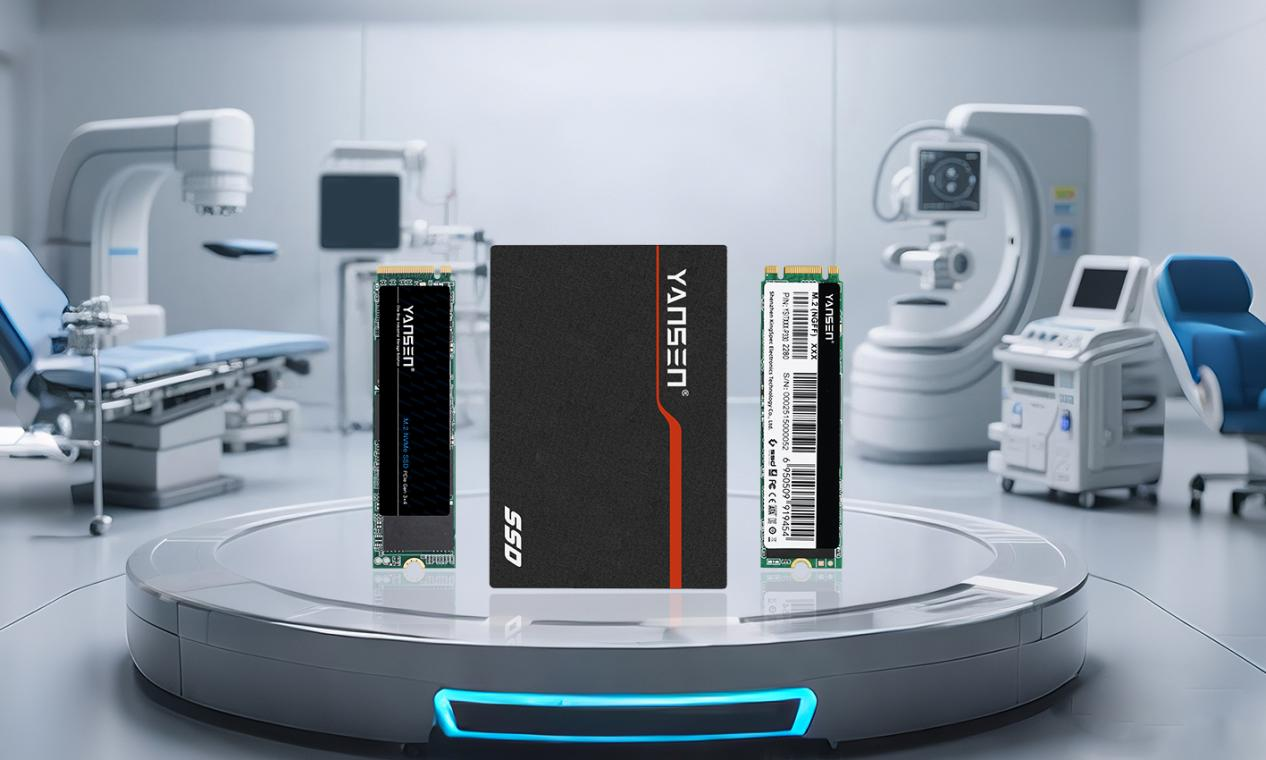
To meet these storage demands, industrial-grade SSDs have emerged as the ideal solution for medical AI imaging. Compared to traditional HDDs, SSDs provide several key advantages:
- High-Speed Read/Write: Industrial-grade SSDs are capable of providing extremely high read/write speeds, allowing for faster processing of large imaging datasets. In the context of AI-powered medical imaging, this ensures that images can be loaded, analyzed, and processed in real-time, enabling healthcare providers to make faster and more informed decisions.
- Low Latency: Low latency is another critical feature of SSDs. The low-latency characteristics of industrial SSDs enable AI systems to respond quickly to data requests, minimizing delays and ensuring that diagnostics are performed promptly. This is particularly important in emergency situations, where every second counts.
- High Reliability and Data Protection: Industrial-grade SSDs are built to endure harsh environments and provide high reliability. Many industrial SSDs feature advanced error-correction code (ECC) technology, which helps detect and correct data corruption in real-time. Additionally, SSDs often come with features like power-loss protection, ensuring that data is not lost during unexpected power outages. With these capabilities, SSDs offer a more robust and secure storage solution compared to traditional HDDs.
3. YANSEN’s Core Advantages
3.1 High-Performance Storage
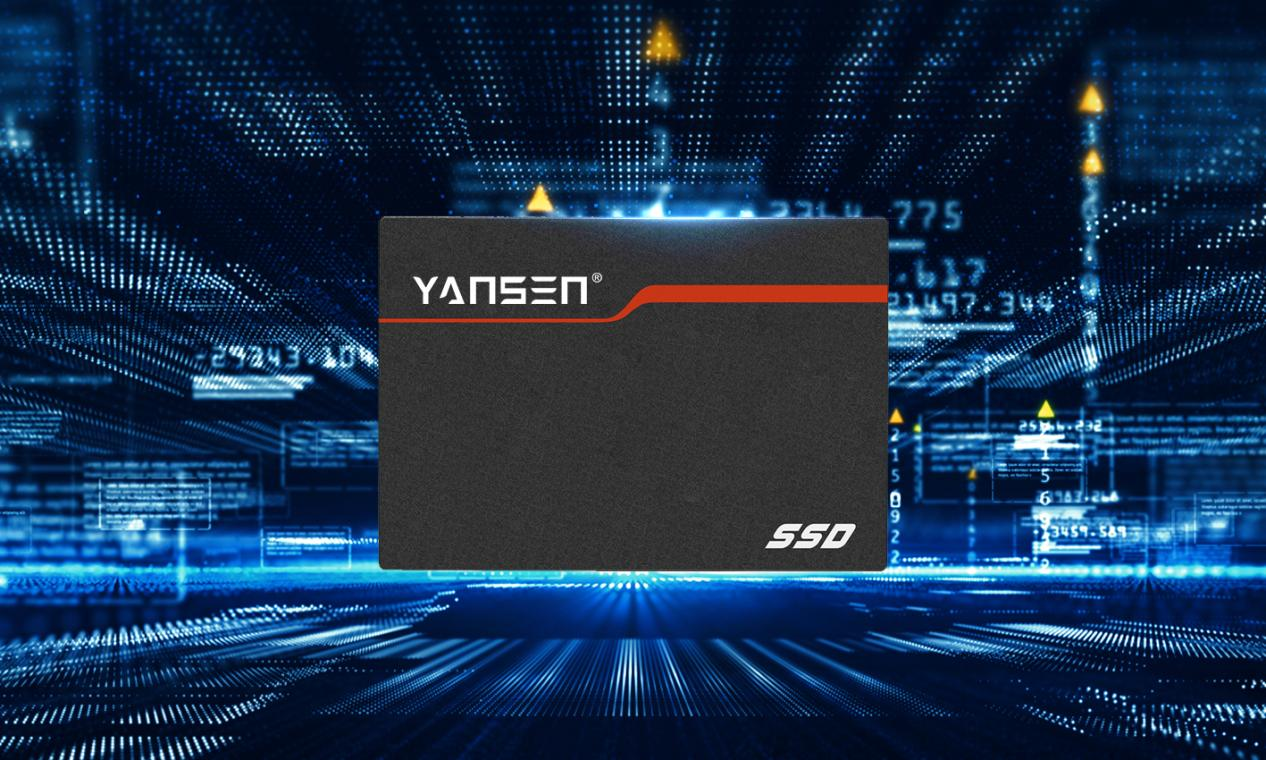
YANSEN’s industrial-grade SSDs are designed specifically for high-performance applications, especially in sectors like medical AI imaging. Our SSDs offer superior performance in terms of read/write speeds, data throughput, and reliability, ensuring that healthcare institutions can meet the growing demand for large-scale data storage and real-time analysis. By providing ultra-fast data access, YANSEN SSDs allow medical professionals to process large imaging datasets quickly, improving diagnostic efficiency and reducing patient waiting times. With our SSDs, healthcare institutions can easily manage and store terabytes of imaging data, ensuring that critical information is available whenever it is needed.
3.2 Data Security and Compliance
At YANSEN, we understand the importance of data security and regulatory compliance in the healthcare sector. Our industrial-grade SSDs are equipped with advanced data encryption features to protect sensitive patient data, and they are compliant with a wide range of international privacy and data protection regulations. Our SSDs are designed to help healthcare institutions adhere to HIPAA, GDPR, and other data protection standards, ensuring that patient information remains confidential and secure. Moreover, YANSEN SSDs include robust backup and data integrity features, such as end-to-end data protection, secure data encryption, and advanced error-correction mechanisms (ECC) to ensure the highest levels of data reliability.

3.3 Customizable Solutions
YANSEN not only provides off-the-shelf industrial-grade SSDs but also offers customizable storage solutions to meet the specific needs of healthcare institutions. Whether you are a small clinic, a large hospital, or a medical research facility, YANSEN can design a storage solution that is tailored to your unique requirements. We offer flexible service models, cost-effective pricing, and high-quality products, helping healthcare organizations optimize their storage systems without breaking their budgets. With our customizable solutions, healthcare providers can scale their storage capabilities as their needs grow, ensuring that they always have the resources they need to support their AI imaging systems.
4. How YANSEN Helps Healthcare Institutions Achieve AI Imaging Upgrades
4.1 Enhancing AI Imaging Analysis Efficiency
As the role of AI in medical imaging becomes more prominent, healthcare institutions increasingly depend on high-performance storage systems to manage and analyze large volumes of imaging data. YANSEN’s industrial-grade SSDs are specifically engineered to support the demanding needs of AI-based imaging systems. By providing extremely fast data access speeds and large storage capacities, YANSEN SSDs enable healthcare organizations to process and analyze images quickly, accelerating the entire diagnostic workflow.
The speed and reliability of YANSEN SSDs ensure that data can be retrieved and processed in real-time, allowing AI algorithms to analyze medical images efficiently and accurately. Whether it’s CT scans, MRIs, or X-rays, YANSEN SSDs facilitate the fast reading, writing, and storing of these images, ensuring that medical professionals can make timely and informed decisions without delays. This is particularly important in critical care scenarios, where immediate access to accurate diagnostic data can be life-saving.
Additionally, YANSEN’s SSDs support AI models that require real-time feedback to improve diagnostic accuracy. By processing data without lag, YANSEN SSDs contribute directly to better outcomes in AI-assisted diagnoses, reducing the potential for errors and enhancing the overall quality of care provided by healthcare facilities.
4.2 Specific Outcomes: Reducing Diagnostic Time, Improving Accuracy, and Optimizing Storage Costs
Healthcare institutions using YANSEN industrial-grade SSDs can expect measurable improvements in several areas:
- Reduced Diagnostic Time: The high-speed read/write capabilities of YANSEN SSDs reduce the time required to load, analyze, and store medical images. By eliminating the bottlenecks inherent in traditional storage devices, healthcare professionals can access imaging data almost instantly, accelerating diagnosis and treatment planning. This results in faster decision-making, reducing patient waiting times, and enabling timely interventions in critical situations.
- Improved Accuracy: Fast data processing allows AI algorithms to analyze imaging data in near real-time, enabling healthcare providers to make more accurate and reliable diagnoses. As AI learns from larger datasets and improves its diagnostic algorithms, the speed and accuracy of its recommendations will also improve. With YANSEN SSDs supporting these capabilities, healthcare professionals can trust the AI’s findings with greater confidence.
- Optimized Storage Costs: By leveraging YANSEN’s high-capacity, high-performance SSDs, healthcare institutions can minimize the need for frequent hardware upgrades and reduce ongoing storage maintenance costs. With the increased durability and efficiency of SSDs compared to traditional hard disk drives (HDDs), hospitals and clinics can ensure that their data storage systems are both cost-effective and scalable, without compromising on performance or security.
5. Looking to the Future: YANSEN’s Continued Innovation in Advancing Medical AI Imaging
5.1 YANSEN’s Vision for the Future of Medical Storage Technology
The future of medical AI imaging is poised for continued evolution, with advancements in machine learning, deep learning, and imaging technologies driving an exponential growth in medical data. As AI algorithms become more sophisticated and imaging techniques continue to improve, the amount of data generated by these systems will only increase. This will create even more demands for faster, more reliable, and scalable storage solutions.
YANSEN is committed to staying at the forefront of these technological advancements. We are actively investing in the next generation of SSDs, focused on increasing storage capacities, improving read/write speeds, and integrating intelligent data management features. Our next-gen SSDs will offer healthcare institutions more powerful tools to handle the growing demands of AI imaging, providing them with the flexibility and scalability they need to keep up with rapid technological progress.
Additionally, YANSEN is exploring the development of advanced storage management tools that can leverage AI and machine learning to further optimize data storage. These tools would allow healthcare organizations to better manage their data, prioritize critical information, and ensure optimal data integrity and security. With these innovations, YANSEN aims to be the go-to partner for healthcare providers looking to future-proof their storage systems.
5.2 A Call to Global Healthcare Institutions for Partnership with YANSEN
As AI-powered medical imaging technologies become more integral to healthcare systems worldwide, YANSEN believes that collaboration with leading medical institutions is crucial for advancing healthcare solutions. We invite healthcare organizations across the globe to partner with YANSEN in implementing cutting-edge storage solutions that can support the next generation of AI imaging applications. Together, we can push the boundaries of what’s possible in healthcare diagnostics, creating more efficient, accurate, and reliable systems for patient care.
By working with YANSEN, healthcare institutions will not only gain access to high-performance storage solutions but also benefit from our expert support and consultation, ensuring that their storage needs evolve alongside the rapidly changing healthcare landscape. We are excited about the opportunity to collaborate with organizations that share our vision for improving healthcare outcomes through technology.
6. Conclusion
The rise of AI-driven medical imaging presents both significant opportunities and challenges for healthcare organizations. With the ever-increasing volume of data being generated by AI imaging technologies, healthcare institutions must invest in storage solutions that offer high-speed performance, large capacities, and top-tier data protection. YANSEN’s industrial-grade SSDs provide an ideal solution to these challenges, offering fast, reliable, and secure storage for medical AI imaging data.
As the healthcare industry continues to innovate, as ssd manufacturer, YANSEN will remain committed to driving progress in medical storage technology. Our continued focus on improving storage performance, capacity, and security will empower healthcare institutions to adopt AI imaging technologies confidently and efficiently. We look forward to continuing our partnership with global healthcare providers and helping them shape the future of healthcare diagnostics through innovative storage solutions.
With YANSEN’s industrial-grade SSDs, healthcare organizations can rest assured that they have the tools they need to support the growing demands of AI-powered medical imaging, enabling them to improve diagnostic accuracy, reduce waiting times, and ultimately deliver better care to patients worldwide.