In the age of big data and digital transformation, storage technology has become the backbone of modern industry and enterprise. Whether it is autonomous factories, intelligent transportation systems, cloud computing, or AI-driven analytics, the stability, security, and scalability of data storage directly define organizational efficiency. Choosing the right storage solution is no longer a matter of cost alone—it is a strategic decision that impacts operational continuity, risk management, and long-term competitiveness.
Broadly speaking, professional-grade storage can be categorized into industrial-grade, enterprise-grade, and aerospace-grade. This article focuses on the industrial SSD vs. enterprise SSD comparison, highlighting their key differences, technical foundations, and application-specific advantages.
Later, we will also introduce aerospace-grade storage, but for now, let’s dive into the two most widely used categories: industrial-grade SSDs and enterprise SSDs.
1. Industrial SSD vs. Enterprise SSD: A Detailed Comparison
Industrial SSDs (Industrial Solid-State Drives) and Enterprise SSDs may share similar hardware foundations, but they serve very different markets, workloads, and reliability expectations. Below is a breakdown across the most critical dimensions.
1.1 Performance and Speed
- Industrial SSDs:
Industrial-grade drives prioritize stability over raw speed. In a factory automation system, a surveillance device, or a transportation control unit, it is more important that the SSD continues to function under stress than to hit extreme IOPS benchmarks. Industrial SSDs typically support moderate read/write performancebut are optimized for low-latency, deterministic response times that ensure consistent behavior in unpredictable environments. - Enterprise SSDs:
In contrast, enterprise-grade SSDs are engineered for high-performance computing environmentssuch as servers, databases, and virtualized data centers. These drives offer very high sequential throughput (up to 7GB/s on PCIe Gen4 NVMe) and hundreds of thousands of IOPS to keep up with demanding workloads like OLTP databases, AI training, and cloud services.
1.2 Endurance and Lifespan
- Industrial SSDs:
These devices often employ high-quality NAND flash (MLC, TLC, and sometimes pSLC)with strong wear-leveling algorithms. The focus is not only endurance measured in Drive Writes Per Day (DWPD) but also predictable behavior under frequent small writes. For example, a factory robot writing logs continuously requires endurance over time, not just peak write capacity. - Enterprise SSDs:
Enterprise SSDs are optimized for intense write-heavy environments. With endurance ratings of 1–3 DWPD over five years, they are capable of sustaining massive database workloads or virtual machine writes. Advanced error correction codes (ECC)and sophisticated wear-leveling allow enterprise SSDs to operate reliably under 24/7, high-density write operations.
1.3 Environmental Tolerance
- Industrial SSDs:
Built for harsh environments, industrial SSDs are designed to survive temperature extremes (-40°C to +85°C), humidity fluctuations, and constant vibration. This makes them ideal for transportation systems, aerospace testing equipment, oil & gas rigs, and smart city infrastructure. - Enterprise SSDs:
Enterprise drives typically do not need to withstand such extremes but must cope with data center conditions: controlled airflow, temperature regulation, and potential power fluctuations. Key features include power-loss data protectionto ensure no corruption during sudden blackouts and thermal throttling to maintain consistent performance under high workloads.
1.4 Security and Data Integrity
- Industrial SSDs:
Industrial storage focuses on basic data protection—robust ECC, wear leveling, and sometimes conformal coating for environmental resilience. Security in this category is about ensuring data remains intact despite physical shocks or temperature fluctuations. - Enterprise SSDs:
Security goes several steps further. Enterprise-grade SSDs integrate AES-256 encryption, TCG Opal 2.0 compliance, secure erase functions, and tamper resistance. In sectors like finance, healthcare, and government IT, enterprise SSDs play a critical role in protecting sensitive, mission-critical data.
1.5 Scalability and Flexibility
- Industrial SSDs:
Industrial storage is often application-specific. These drives are available in various form factors such as 5-inch, mSATA, M.2, and Slim SATA, but the scalability is limited. They are ideal for dedicated systemswith fixed workloads rather than flexible scaling. - Enterprise SSDs:
Enterprise storage is built for growth. They support hot-plugging, multi-namespace management (up to 16 namespaces in NVMe), and larger capacity configurations (from terabytes to petabytes when scaled). In a cloud environment, these features minimize downtime and support elastic storage expansion.
1.6 Application Scenarios
- Industrial SSD Applications:
Smart factories and industrial automation
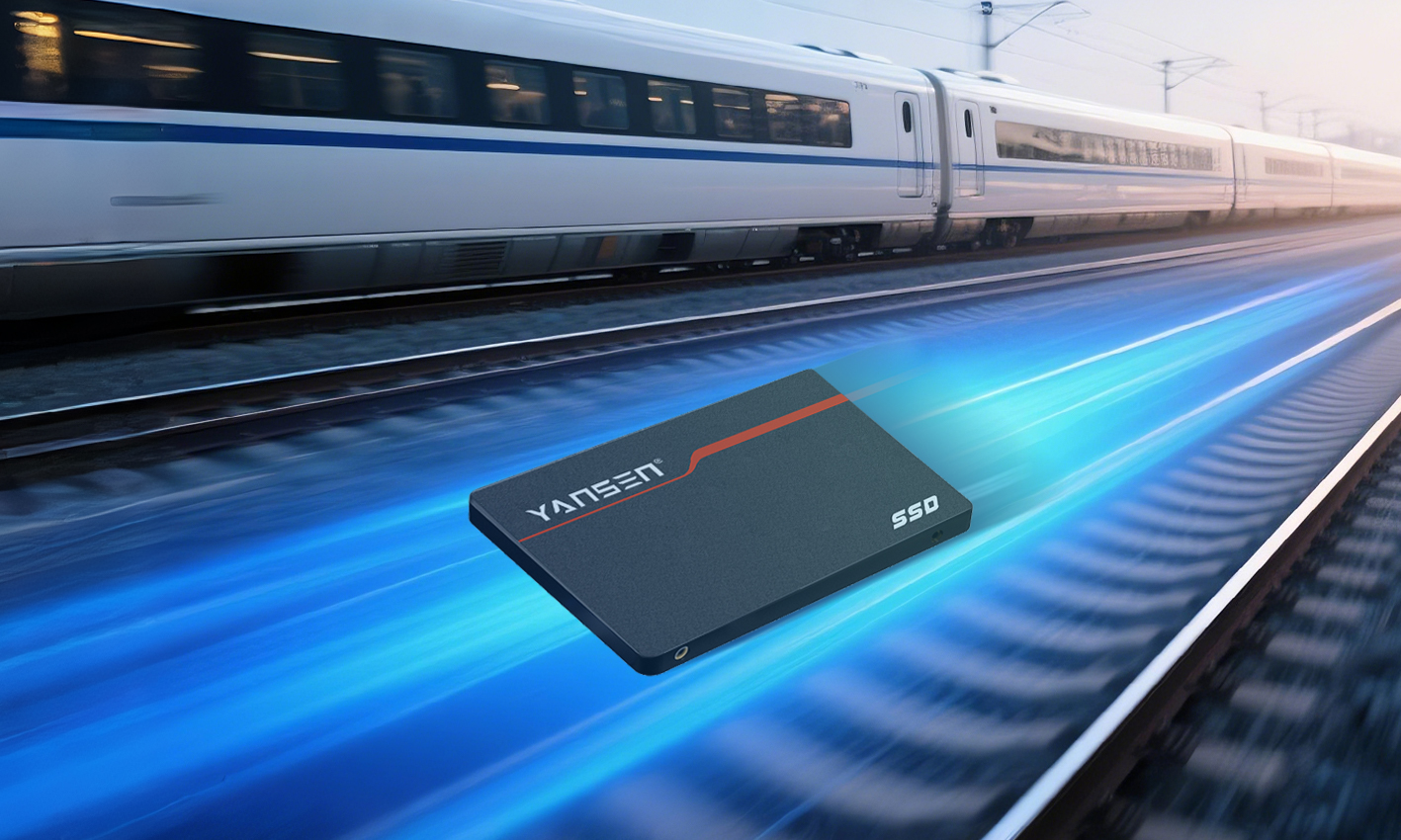
Railway and aviation systems
Energy and mining equipment
Military-grade portable devices
Edge IoT deployments in harsh outdoor conditions
- Enterprise SSD Applications:
Cloud data centers and hyperscale computing
AI and machine learning platforms
Virtual desktop infrastructure (VDI)
Mission-critical databases (Oracle, SQL, SAP HANA)
Financial and healthcare IT systems

2. YANSEN Industrial Storage Solutions
As a leading provider of industrial-grade storage and enterprise-grade storage, YANSEN offers a comprehensive portfolio tailored to both harsh industrial environments and high-performance enterprise deployments.
2.1 YANSEN Industrial SSD Solutions
- Key Features:
Next-generation 3D NAND flash technology
Endurance rating of 1 DWPD over five years
Compliance with TCG Opal 2.0 and AES-256 encryption
- End-to-End Data Path Protection
Industrial temperature range: -40°C ~ +85°C
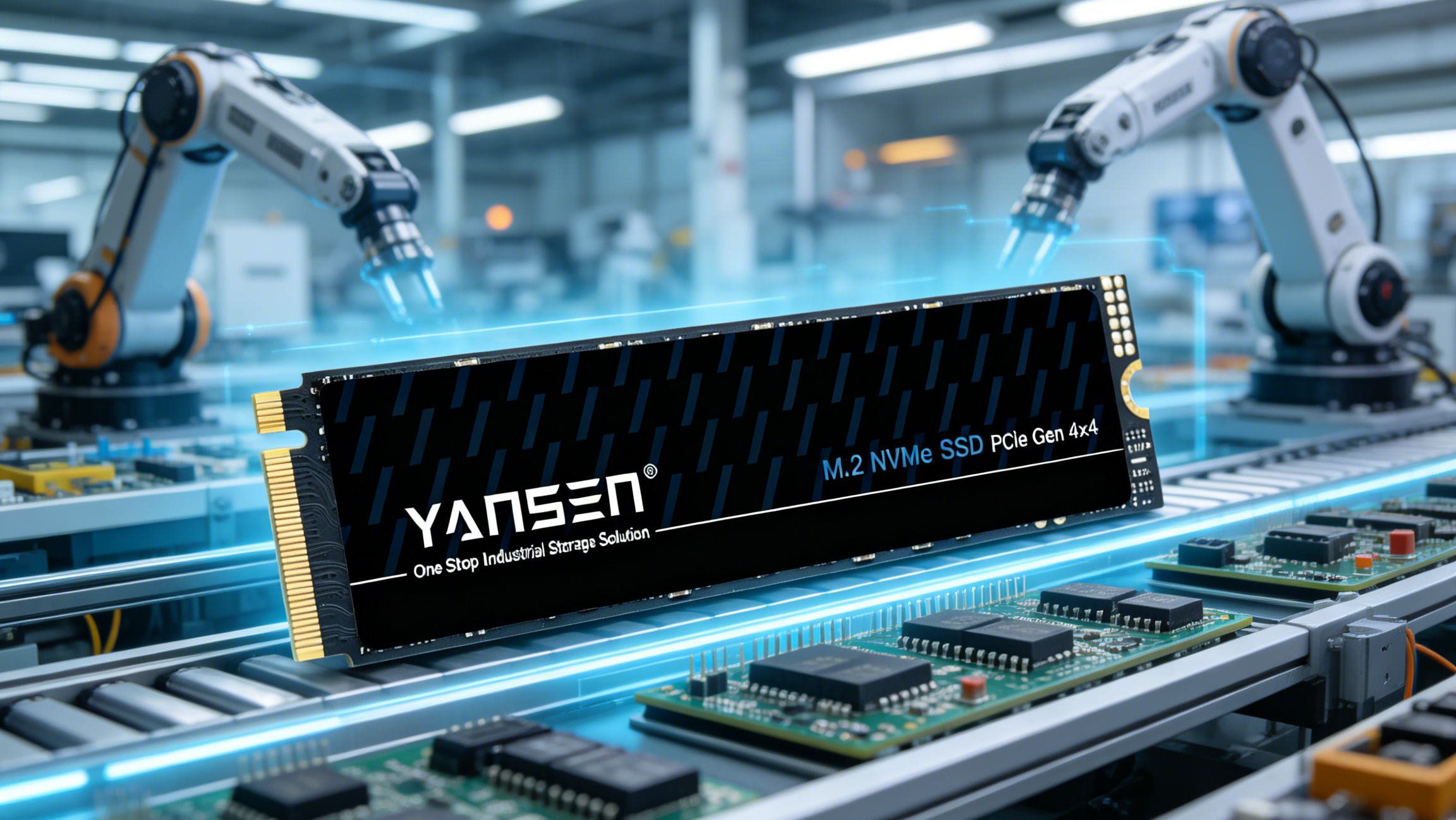
Available in 2.5-inch, M.2 2280, M.2 2242, mSATA, Slim SATA
These SSDs deliver long-term reliability for applications like automation, transportation, and smart infrastructure.
2.2 YANSEN PCIe Enterprise Solutions
- Key Features:
Self-Encrypting Drive (SED) with TCG Opal 2.01 support
Next-generation 3D NAND with PCIe Gen4 x4 NVMe 1.4 compliance
Endurance of 1 DWPD (five years) for enterprise workloads
Namespace management with up to 16 namespaces
- SafeDATA power-loss protection
Advanced ECC and end-to-end data integrity
512B and 4096B LBA support
- EDSFF E1.S SSD Features:
E1.S 5.9mm 12W form factor (31.5mm × 111.49mm × 5.9mm)
Supports up to 32 EDSFF SSDs in a single 1U server (256TB capacity)
Optimized for data centers and cloud systems
Capacity up to 7.68TB
QoS performance with 99.99999% consistency
Advanced security and full power-loss protection
3. Conclusion
When it comes to Industrial SSD vs. Enterprise SSD, the choice depends entirely on the operating context.
3.1 Industrial SSDs:
Best suited for mission-critical devices that operate in harsh environments where durability and stability matter more than raw speed.
3.2 Enterprise SSDs:
Ideal for high-performance computing, where data throughput, scalability, and advanced security are non-negotiable.
By choosing YANSEN’s tailored solutions, organizations can confidently align their storage strategy with their operational priorities—whether it’s stability in the field or performance in the data center.

4. FAQ: Industrial SSD vs. Enterprise SSD
4.1 What is the main difference between industrial SSDs and enterprise SSDs?
Industrial SSDs prioritize reliability in extreme environments, while enterprise SSDs emphasize performance, scalability, and security for data center applications.
4.2 Can industrial SSDs be used in servers?
Yes, but they are not optimized for high-throughput workloads. They are better suited for edge devices, IoT systems, and rugged applications. For servers, enterprise SSDs are more appropriate.
4.3 What endurance rating should I look for in enterprise SSDs?
Most enterprise SSDs are rated between 1–3 DWPD (Drive Writes Per Day) for five years, depending on workload intensity.
4.4 How do industrial SSDs handle extreme environments?
YANSEN industrial SSDs are built for -40°C to +85°C operation, with vibration resistance and humidity protection, ensuring reliability in factories, vehicles, and outdoor deployments.
4.5 Are enterprise SSDs secure enough for finance and healthcare applications?
Yes. Enterprise SSDs support AES-256 encryption, TCG Opal 2.0 standards, and power-loss protection, ensuring compliance with strict data security regulations.
4.6 Which is more cost-effective: industrial SSD or enterprise SSD?
l Industrial SSDs:
More cost-effective for fixed-function, rugged environments.
- Enterprise SSDs:
Better ROI for scalable IT environments where downtime and performance bottlenecks cost more than hardware.
4.7 Does YANSEN provide both industrial and enterprise SSD solutions?
Yes. YANSEN offers a full range of industrial storage (M.2 sata, mSATA, Sata Half Slim) and enterprise storage (PCIe Gen4 NVMe, EDSFF E1.S) with global certifications, covering both rugged field deployments and advanced data center workloads.